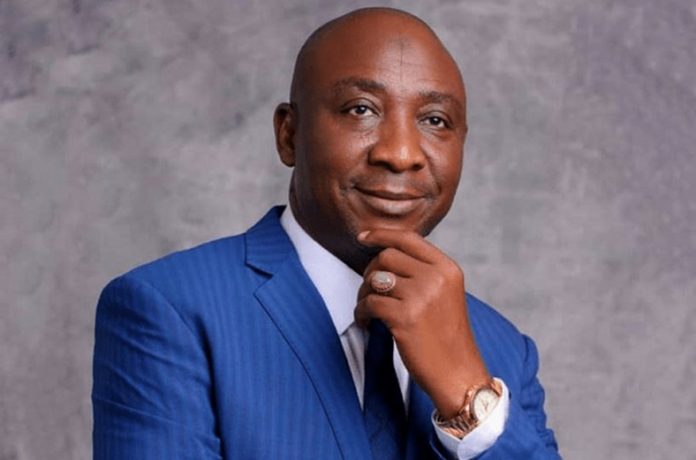
November 25, (THEWILL) – On Friday in Niamey, Niger Republic, at the WAFU B 17th Ordinary General Assembly, the Nigerian football landscape gained significant momentum with the election of Alhaji Ibrahim Musa Gusau as the first Vice-President of the West African Football Union (WAFU) B Zone.
Gusau’s victory is not merely a personal achievement but a moment of strategic importance for Nigerian and West African football. His rise to this influential role underlines his growing prominence within African football governance, especially as he continues to steer the Nigerian Football Federation (NFF). Those unfamiliar with the structure of regional football on the continent might question what the implications of Gusau’s election are, what his potential leadership agenda is for WAFU B and what broader significance does it all have for Nigeria’s footballing influence in West Africa.
WAFU B represents the western zone of the Confederation of African Football (CAF) and includes some of the continent’s most successful football nations, including Nigeria, Ghana, Côte d’Ivoire, and Burkina Faso. It also encompasses Togo, Benin Republic, and Niger Republic.

As a regional body, WAFU B’s primary focus is to organise competitions, facilitate youth development programmes, and manage administrative coordination between its member nations. These nations have historically provided Africa with top football talent, but the region has been hampered by financial instability, lack of infrastructure and political fragmentation within its leadership.
In this context, Gusau’s leadership could be pivotal in shaping WAFU B’s direction. With vast experience within Nigerian football, Gusau is poised to push for structural reforms and the diversification of revenue streams through increased sponsorship and partnerships with global football entities.
By promoting regional competitions, improving governance, and providing financial oversight, Gusau’s approach to WAFU B could revitalise this important zone and give it more prominence within CAF’s overall strategic objectives.
Gusau’s rise within Nigerian football governance has been steady and influential. Serving as the president of the Nigerian Football Federation (NFF), Gusau has overseen several reforms aimed at improving football administration and elevating the national team’s competitiveness. His leadership has been marked by a focus on creating more efficient management structures within the NFF, addressing infrastructural gaps, and encouraging youth development programmes.
Gusau’s election to WAFU B’s vice-presidency is, therefore, a natural extension of his leadership trajectory. His ongoing leadership at the NFF has positioned him as an administrator ready to navigate the complex relationships within African football politics. Gusau’s stewardship at the NFF has earned him recognition beyond Nigeria, strengthening his candidacy within WAFU B.
Gusau’s election as first vice-president of WAFU B did not occur in a vacuum. A variety of political and strategic manoeuvres led to his success. Nigeria, under Gusau’s leadership, has long been one of the major powerhouses of African football. As such, Nigeria’s lobby efforts were significant, leveraging both its footballing pedigree and strategic relationships within the CAF structure.The election, however, was not merely a walkover for Gusau.
WAFU B elections are often fraught with intra-regional politics. Different factions within the zone, each with unique interests and priorities, must find common ground. In this instance, Gusau’s candidacy was likely bolstered by his reputation for balancing national interests with regional cooperation. His administration of the NFF also gave him the credentials necessary to foster trust among his peers in WAFU B, whose member countries range from financially stable footballing nations to those still struggling with basic football infrastructure.
In this new role, Gusau’s agenda for the future of WAFU B will be continuously scrutinised. While the specifics of his plan remain to be fully articulated, several key areas can be expected to form the core of his leadership.
In the aspect of Youth and Grassroots Development, Gusau has long been a champion of youth football, and his elevation to WAFU B vice-president could see the expansion of regional youth programmes. A priority will likely be to create stronger football Academies across member nations, targeting young talent and developing their skills to compete at the continental and international levels.
By harnessing the immense potential of West Africa’s youth, he can ensure that WAFU B produces the next generation of football stars who can rival the best of Europe and South America.
Financial instability has been a persistent issue within WAFU B, with many regional tournaments operating on shoestring budgets.
Gusau’s experience at the NFF, where he oversaw efforts to secure sponsorship deals and maximise revenue from international partnerships, could be crucial in turning WAFU B’s financial fortunes around. By securing long-term sponsorship agreements and establishing new revenue models, he could help to establish a more self-sufficient regional body that will no longer depend on sporadic funding from CAF or member governments.
West Africa’s football infrastructure has long lagged behind other regions, with many countries still struggling to build adequate stadiums and training facilities. Gusau is expected to focus on promoting infrastructure development within the region. By working with national governments and international development bodies, he can secure funding to improve training grounds, build modern stadiums, and foster better conditions for players and coaches.
As WAFU B Vice-President, Gusau will need to coordinate effectively with member nations, ensuring that they collaborate on projects that benefit the region as a whole. This could include joint competitions, shared football marketing campaigns, and collective efforts to promote West African football to a global audience. Collaboration will be critical, especially given the political and economic diversity within the region.
Gusau’s dual role as both NFF president and WAFU B vice-president provides Nigeria with a unique opportunity to further enhance its influence in African football governance. His leadership could unlock new opportunities for Nigerian football, from more favourable positions in continental decision-making bodies to increased representation in major CAF tournaments. Furthermore, Gusau’s experience at WAFU B could provide him with the insights necessary to tackle the domestic challenges within Nigeria’s football ecosystem.
However, this dual responsibility also comes with challenges. The domestic and regional duties might clash, and Gusau will need to demonstrate exceptional time management and delegation skills. Nigerian football fans, stakeholders, and players alike will be watching closely to see how Gusau balances his regional and national commitments, particularly in light of the recent challenges facing Nigeria’s local leagues and the national team.
Gusau’s election as WAFU B vice-president is a significant milestone not just for Nigeria but for West African football as a whole. His leadership could help transform the region’s football governance, raise the profile of its competitions, and create lasting legacies for future generations of players. While challenges lie ahead, Gusau’s track record suggests he is well-equipped to tackle them head-on. If successful, his tenure could shape the future of West African football for decades to come.

Jude Obafemi is a versatile senior Correspondent at THEWILL Newspapers, excelling in sourcing, researching, and delivering sports news stories for both print and digital publications.