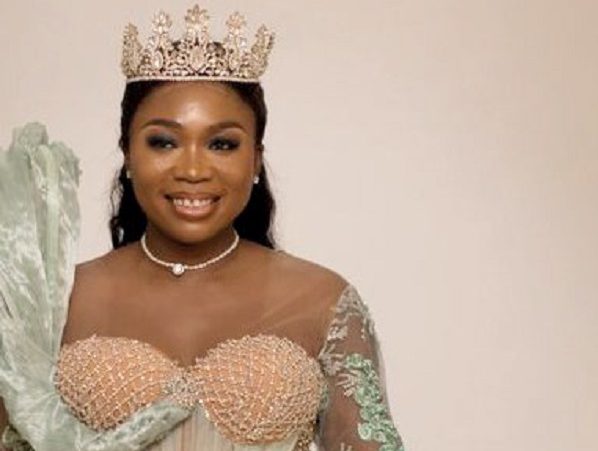
Female pilot, Atinuke Stanley-Pepple speaks with IVORY UKONU about her career and other matters. Excerpts:
Did you always dream of becoming a pilot?
No, not really, but at a point it was all I wanted to do and I became passionate about it.

What influenced the decision to become one?
I was in my fourth year in the university studying law and we had a convocation ceremony where someone who was high up in their career was invited to speak to us and basically inspire the graduating set. In this instance, Air Vice Marshal Paul Dike was the guest speaker. Usually, I do not go for convocation ceremonies, besides it wasn’t even our graduating set. But when I saw the banner with his name on it, I became excited. I couldn’t explain it, but I was eager to be there.
I got there quite early and sat in the front row. I was just so driven. Immediately after the ceremony, I called my dad and told him that I would like to become an Airforce pilot, having been inspired by Dike. But I do not like war or anything that is conflict related. I still continued with my law studies regardless, completed my degree and proceeded to Law school. Thereafter, my dad asked what I wanted to do and I told him what I had indicated interest in earlier. That is pretty much how it happened.

Did you practise with your law degree?
Yes, a bit. Before I started flying
How long did it take you to get your pilot certification?
Flying school doesn’t take long, to be quite honest. It depends on the country and the person as well. I did part of my training at the International Aviation College, Ilorin, Kwara State and the Canadian Flight Academy, Canada. In Ilorin, it took about a year but it really depends on the availability of finances and how focused one is and one’s ability to learn.
What does it really cost to train to become a pilot?
When I did my training, the dollar rate was pretty fair on the Nigerian economy. So if I say that it cost about $40,000, for example, it is not the same thing now, in terms of the exchange. Regardless, you are looking at a couple of millions in Naira.
What year was this?
I went for my initial training in 2012, just about two weeks after I got called to the bar.
Why is it so expensive to become a pilot?
I think it is because it is a specialised career. Besides, an average aircraft doesn’t come cheap. If it did, almost everyone would own one. This is beside the cost of maintenance. While there are very expensive cars, you obviously do not need a whole maintenance team to cater to your car.
What should people who are passionate about building a career as a pilot but lack the financial wherewithal do then?
To be honest, training as a pilot is quite expensive. Going to flying school is not all that is required. After attending flying school, for one to actually fly an airplane, one has to be trained on how to fly a particular kind of aircraft. You have to go to another school to train on the particular kind of aircraft your airline of choice uses to convey its passengers. It is not like being able to drive a car, regardless of the brand. With aircrafts, it is different. How you fly a Boeing 737 series is different from knowing the intricacies of how to fly say an A320 aircraft. But what I will say is that if you want something, just go for it. Some flying schools can be considerate because they know it is quite expensive. So sometimes they will give one a minimum down payment and the rest is spread and completed upon when you finish from the school.
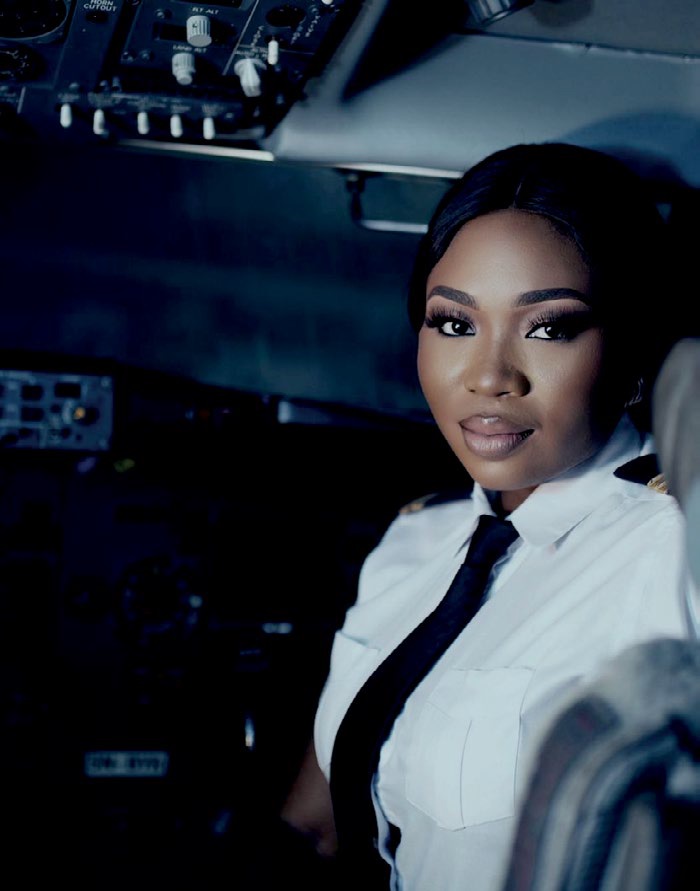
Is type rating done at the flying school in Ilorin?
No. Just to learn the basics of flying, it is the initial school.
What kind of aircraft were you trained to fly?
The Boeing 737
Why did you choose to train on this aircraft?
You don’t have to choose, so to speak. However, it all depends. But if you plan to fly, then you think of the aircraft that is more commercially used. That will be your deciding factor.
Can you fly any other kind of aircraft?
The thing about flying is that for every time you need to switch flying an aircraft, you have to undergo another training, the type rating training, which is a specialised training, because the systems are different.
What was the experience like in flying school?
It was interesting. I was mixed with people who were in the Airforce and undergoing training alongside us, the civilians. I was the only lady in my set. The training was a little demanding, no doubt, because you are trained to be conscious of the fact that you have people’s lives in your hands, literally.
Did the fact that most people consider piloting a male-dominated career not deter you from venturing into it?
No, it didn’t. Like I said, a man who stood out in his career had inspired me to become a pilot. I couldn’t be deterred. Instead, I got more support and encouragement.

How did your parents react to the news of your career switch?
It was pretty normal because my dad, Captain Adegboyega Dawodu, is a pilot. He is in Aero Contractors. My husband, sister and brother are all pilots, too. My brother plies his trade in the United States. So it is a flying family.
What does it feel like coming from a family of pilots?
We always talk about the job. It is easier to talk about our experience at work and to suggest the best ways to deal with certain issues. We rub minds and share knowledge about the job. It does keep the conversation going among us. However, I have by God’s grace, distinguished myself beyond just being a pilot and my background in law.
Are you a Captain?
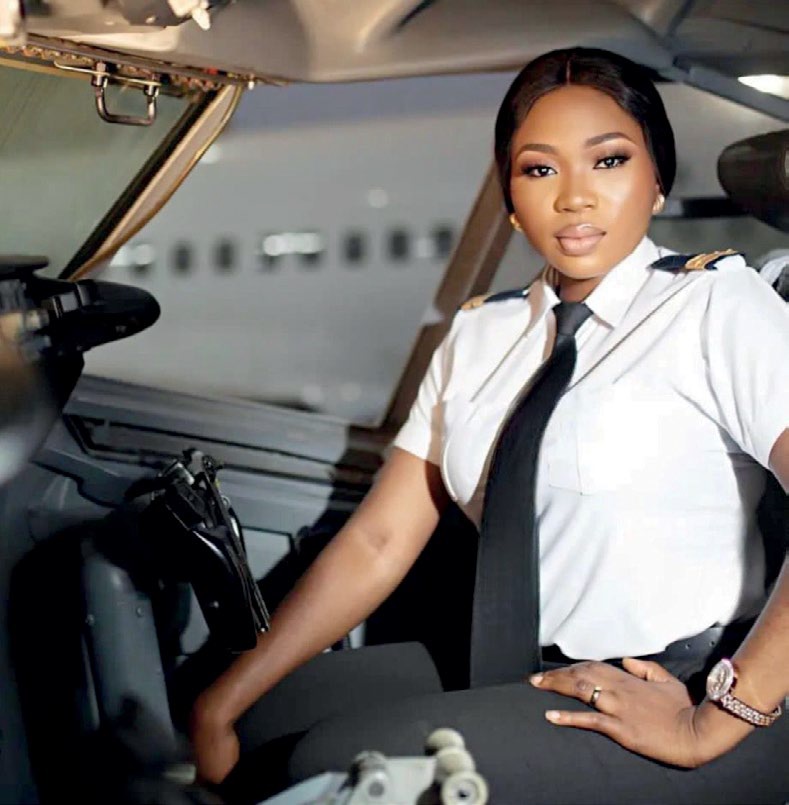
No. For one to be a Captain, you have to have four lines on your shoulder badge, but I have three. Generally, pilots are referred to as captains and I know that I will be one soon.
How long does it take for one to become a Captain?
It depends on company policy and flying hours. You will also be tested. One has to make between 3,500 and 4,000 hours to become a Captain. There is usually a maximum number of hours you can fly, a legal limitation. One can only fly for 100 hours per month and an average of 1,200 hours annually. It’s less stressful because it can tell on your body quickly. It is for the reason of wanting the pilots to be at their peak whenever they are flying. Anything beyond the legal limit can be a lot. There is also a legal limit for a day. You can’t spend more than 13 hours per day because there is a rest time you must have. My younger brother, for instance, is a Captain.
Did he start flying before you?
Technically, no. Again, it depends on company policy and the number of hours spent flying. I started flying before my brother. In his case, he was an instructor after he finished flying school. This allowed him to build a lot of hours quickly because he is flying as he is instructing and teaching his students in the air. In my own case, despite the fact that I was offered an opportunity to become an instructor after training, I went to start law practice before travelling to do my type rating and then officially started flying. Also to become a captain, you will be tested. So on an average of four years from the day you start flying, cumulatively, you can make Captain. Apart from meeting the stipulated hours, one must have the ability to lead by example and respond properly in an emergency. Your decision-making process is important as well.
Is the Nigeria Civil Aviation Authority involved in certifying pilots?
The NCAA is a regulatory body and you do have to get your licence from them after completing training and passing your medicals.
What is your typical day like as a pilot?
I have fun on the job. I work and come back home and rest. That is pretty much a regular day.
What is most challenging about being a female pilot?
To be honest, I do not find the job challenging. I see it as having fun. I think people should just be focused and understand why they are doing something. When that happens and if for any reason you do have a challenge, it doesn’t seem like a challenge but an opportunity to grow.
What do you enjoy most about flying?
The crew and the company. The company policy and culture is very positive, almost like we are a family. Even when we are not working, we spend more of our time together. And when you are working with positive people, it makes the job easier. The crew is the best part of the job. I am just having fun on my job and that is what makes it more enjoyable for me.
Have you ever had cause to manage any emergency say, turbulence?
Turbulence is not an emergency situation or anything to be worried about. It is just different from normal flying because you are going into clouds that have more moisture, which is just a change in the density or composition of the air you are going through. It isn’t really something to be worried about as long as your seat belts are fastened.
I have had turbulence experiences, but because I understand what is going on, I do not really think about it because I know what I am supposed to do as it is not fear inducing. That is one piece of information that needs to go out to allay people’s fear. Even if you lose an engine, it is nothing to be afraid of because you can still fly the plane with one engine.
If we compare the number of plane crashes to car accidents, the latter is even more intense. For instance, you are driving and your tyre bursts. Depending on how fast the car was going, the resultant accident could be quite fatal.
It would also be nice for people to know that we go for training every six months till we end our flying career. It is mandatory. It is called simulator training. In those training sessions, we go through emergency procedures, all emergencies that one can ever imagine; whether it is engine failure, tyres, anything that one can imagine, we rehearse them as if they are happening in real life.
Does the training take place in Nigeria?
No. We go to facilities that have simulators.
Who pays for the training?
The company does. It is the responsibility of the management to organise the training so that our licences will remain valid. The licences are renewed every six months. Another thing I should also add is that the pass mark for NCAA exams for one to get a license as a pilot is 70 per cent. So one has to be really intelligent and focused to become a pilot.
Why do you think we have less female pilots than their male colleagues?
I would say there are more female pilots today, compared to the past, but definitely they are fewer than the men. I think we need more audacious women. we need to take the bull by its horns. And this just takes me back to the question about challenges. I wouldn’t really say that I did not have challenges. It was just that I was ready to dare. I knew that flying is what I was supposed to do and so it didn’t matter what would come in the way. I was just willing to take the jump.
Is there an age limit for female pilots?
To be honest, no. You can start anytime you want, to become a pilot. And this just goes back to being audacious. If you are confident in yourself and you believe it is what you want to do, if I was on a hiring team and I see your determination, I would be greatly impressed. When I was in law school, there was someone who was over 60 years-old in our class and we were all greatly impressed by his audacity and determination. Likewise, you can start your training to become a pilot at the age of 16. My brother is 27 and he is a Captain. He got a university degree before embarking on that journey. You don’t even need to go to the university to become a pilot because you won’t be needing the certificate.
What is the retirement age for Captains or pilots generally?
That would depend on company policy again, but there are pilots who are in their 50s. It would also depend on either years in service or actual age.
How best do you think this trend of having fewer female pilots can be reversed?
I think one of the ways this can happen is through enlightenment. I am part of a group where there are a lot of female pilots and we try to mentor, educate and provide more exposure on what the industry is all about. It is a community of like- minded people who share a lot of things. And surprisingly, there are 78 of us, even though everyone isn’t in that group. Some of them started flying here and currently fly in the diaspora. Some have finished their flight training and are not officially flying or they are in other aviation sectors. I honestly do not know why more females aren’t going that route.
Money…
I really want to emphasise more on determination. Personally, if I am committed to doing something, I do not let finances keep me from that thing. If you look at the situation of a lot of things, you won’t get anything done. Audacity should be your watch word. I am really impressed by a lot of youths in Nigeria who are audacious to believe in their dreams. At least do the entrance exam first and pass and then you can begin to look for funding.
Are there scholarships available for anyone who is constrained by finance?
Yes. I have a couple of friends who got support from people who believed in their vision. Some state governments do assist.
You earlier mentioned something about mentorship. Are you into one personally?
Yes. Right now, I am building an academy called FACE Academy. It is for the youths. It is an educational platform for life skills; communication skills, relationship building, marriage, cooking, everything. If I was not a pilot, I probably would be teaching. I love teaching, it is something I am passionate about, impacting knowledge.
What advice would you give to young girls who desire to be pilots?
Be audacious, go for it. Get acquainted with the industry. They can reach out to me on Instagram where I am more active because of my mission to bring hope and light to the world. They can reach out to other female pilots as well or communities or aviation related events. Just being in those places and getting the necessary information will definitely encourage them to take the next step.
What are your plans for the aviation industry in the next five years?
I would still be flying joyfully. Since I am very passionate about impacting the youth, I will definitely be partnering with corporate bodies and individuals and hopefully the government, to enlighten people not only about the aviation industry but beyond it. It is not just about giving hope but also about helping to provide the tools, the finances they need to ensure they see their dreams come true. Nigeria is so blessed with amazing minds. A lot of people are stuck because they do not have the knowledge and that is what I intend to get involved in more in the next five years. I am also a talent hunter. I do have a natural gift to spot people’s natural gifts and help them monetise their talents.

What would you consider to be your greatest achievement as a pilot?
When I first flew solo. This was during my training when I had to take off and land the aircraft all by myself and I had to go from one airport to another. It is called hour building. You need to be trusted that you can actually fly the plan all by yourself. It is part of the training.
What would you say significantly shaped you to be who you are?
God first. I am absolutely nothing without Him. Then my family and my husband. I have a good support system and genuine friends.
What drives you?
I find joy in driving people, but I would say that the Holy Spirit drives me and just the need for more. I have big audacious dreams to reach for more.
What life philosophy do you live by?
God first and then other things fall into place.
How do you unwind?
I pray. I love to hang out with my friends a lot either for networking or for work. I love to travel, get a massage at the spa.
Who is that one personality you will consider to be the height of your career when you fly him or her?
That would be Air Vice Marshal Paul Dike. It would be so meaningful to me because he inspired me to become a pilot. Then global celebrities like Bill Gates, Oprah Winfrey or even Kim Kardashian.
Ivory Ukonu is a versatile journalist with many years of experience, with entertainment and society reporting as her area of core competence.