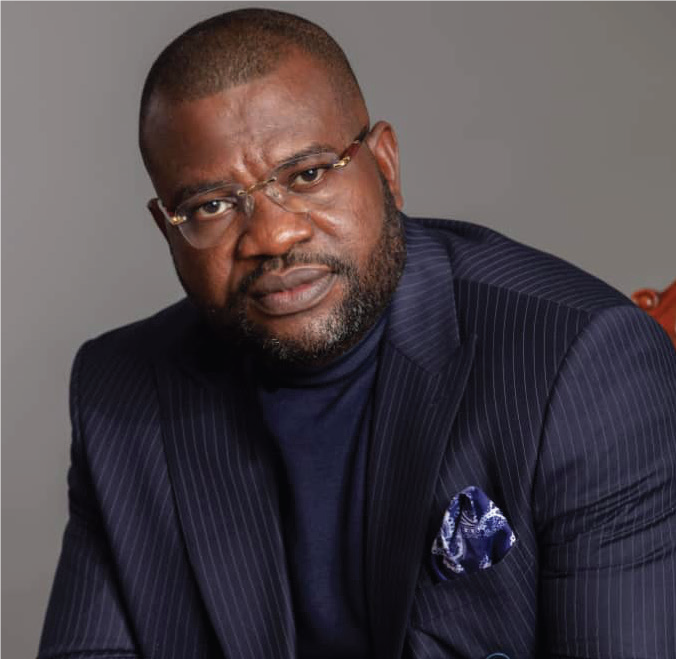
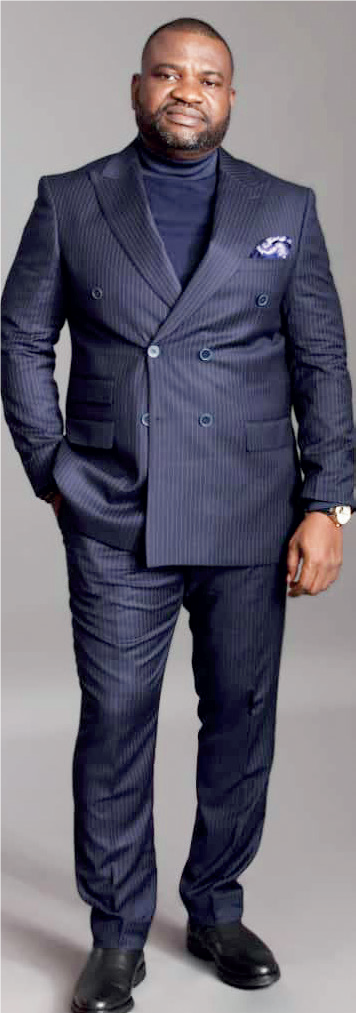
January 23, (THEWILL) – The Founder, All Africa Music Awards (AFRIMA) and marketing communication expert, Mike Dada, speaks with IVORY UKONU about his vision for AFRIMA and what keeps him going
You are a big player in the entertainment industry. What is the attraction?
I won’t really say that I am in the entertainment business. I would like to think that I am in the business of proffering solutions to challenges. Yes I have a Law degree, but I already had a degree in chemical engineering. However, after working with my first degree for a while, I realised that I had a passion for something different and that is building brands, which is now my actual 9-5. Having realised how passionate I am about providing solutions to communication challenges, I decided to acquire the requisite knowledge by getting certifications from the Chartered Institute of Personnel Development, United Kingdom; Nigeria Institute of Public Relations; Chartered Institute of Marketing, United Kingdom, etc. At a time, I became a fellow of the National Institute of Marketing Nigeria as well as acquiring membership of the aforementioned bodies. Later I moved to advertising and got licensed to practice by the Advertising Practitioners’ Council of Nigeria. What I do isn’t to get applause, but simply push myself further so that I can impact society.

Since you had a passion for marketing communication, why didn’t you go with it in the first place?
Sometimes, one isn’t opened to opportunities. One’s knowledge about certain things depends on one’s level of awareness, but when it comes and you realise this is what you want, then you go for it. Sometimes you know what you want, but not how to get it. What made me study chemical engineering was the fact that I was opportune to be one of the brilliant ones. In secondary school, I always took the first position, never came second and aced my O’Levels …. The only logical thing one’s parents would think you should study in school at that time was either law, medicine or engineering. As a young boy, I wanted to become an aeronautical engineer, later I wanted to study medicine and finally, I chose engineering. In the university, I was fully involved in campus/student unionism. I would later discover my passion after school, which is marketing communication and after spending years outside of it, I went for it. I acquired a body of knowledge on it, learnt the ropes and began to practise. Later, I wanted to study law and increase the quality of my thought process and mind. Don’t forget I was a science student and never did literature which was a prerequisite to study law. I had to go back to sit for literature at O Level. The first time, my result wasn’t released, the second time, I failed it and did a re-sit. The third time, the results of the entire centre where I did the exams was canceled. I got the result after four years of trying.
How come you were not discouraged? What made you to keep trying?
I don’t get discouraged easily. That is one of my strong points. I had my eyes set on getting a law degree and since it would require a process for me to acquire it, I subjected myself to it. I eventually got a direct entry admission into the University of Lagos, completed the course and went to law school.
Did you ever practice?
Yes I did.
Do you own a law chamber?
Yes, Simon and Blake. I engaged some lawyers to keep the place running. We are involved in corporate and transactional law. So when there is a need to go to court, we go to court. Public Relations and Law are kind of similar. With the two, you know something about everything and everything about something.
You said you were involved in student unionism in the university. One would think you would been an active player in Nigerian politics today?
Everyone is a political animal, irrespective of whether they are active or not. However, I consult for politicians and political players. We don’t just do the paperwork, we dig deep. We go to the grass roots level to understand the challenges. So, one way or the other, I get involved in politics. At PRAfrica, our PR and brand agency, one of our key strength is political marketing. We ran campaigns for governors and even presidents in some African countries and they won. Some of the campaigns that we have run are the Akinwunmi Ambode election (Lagos State); the Godwin Obaseki election (Edo State); the Gboyega Oyetola election (Osun State); Rotimi Akeredolu (Ondo State); we handled some campaigns in Rivers State as well and many others. And when they come, the idea is to showcase what they will offer to the people of the state that will make a difference and I know those who are passionate and genuine about the country because I am equally passionate about Nigeria and finding solutions to the myriads of challenges facing the country and Africa by extension. Proffering these solutions is not rocket science. Nigerians and Africans are not asking for too much. We all travel out and see the way things are done, we don’t need angels to come and solve some of these problems for us, it is only a function of planning and people doing the right things.

You can’t deny that some of our own challenges are peculiar
That is because the kind of challenges we see are as a result of the kind of system we run. Even if you put someone who has the right solutions to our peculiar challenges, the problems will still be there. Until we find a solution to the system, we will continue to have the same challenges, unfortunately. The system is designed to make the poor become poorer and the rich richer. So I may not be an active player, but I am politically conscious. At the advent of our democracy, I was one of those people in the anti-military struggle calling for the enthronement of democracy.
You mean with the National Democratic Coalition (NADECO)?
No. Quite a number of groups were actively involved to ensure the end of military rule and I was a member of one of such groups. In 1998 it was decided that some or all of us who were part of the struggle should get involved in the transition to democracy and politics. Some schools of thought were against our joining as the military could not be trusted. I was one of those who felt we should get involved because if we were not part of the democratisation process, we would not be able to correct the anomalies or get certain results. But because of the democratic manner by which the organisation I belonged to was being run, as well as the ideology of the organisation, they concluded that we shouldn’t and we were bound by that.
Looking back now, it is unfortunate that those who were not really part of the struggle became the so-called political leaders and office holders. These characters claim to be vanguards of democracy today and we just laugh at them because we know what roles they played when we fought for democracy to be entrenched. But there are certain things that you go to the grave with. And what did they do to us that fought for the enthronement of democracy? They pushed us away. Many of the genuine vanguards of democracy in those days would travel in the middle of the night with leaflets, pamphlets and posters from Ife to Owerri and Maiduguri and back to Lagos. Many of our comrades lost their lives, families, and limbs to this same cause. Some are living in abject poverty today. But I can’t be mentioning what some of us do to keep these comrades afloat. Things like paying for their children’s school fees, providing them with some sort of succour. It is just unfortunate that many of those in the corridors of power are far from the vanguards of democracy they claim to be. And we know them. But it is okay. Hopefully, Nigeria will get better.
So what has happened to the spirit of activism in you?
It is still there. It never died. For anyone that seeks a better society, you will always be an activist. I still canvass and yearn for a better society. You can see that in all of the things that I am involved in, even with the All Africa Music Awards project. People think I am crazy and wonder why I cannot channel the money I spend on AFRIMA, which has no fundamental monetary returns, to other viable ventures. For me, it is about fulfilling our dreams of ensuring that we can tell our own story and contribute our own quota to the development of society.
What is the story behind AFRIMA?
It is part of my quest to project the image of Africa positively to the world. The idea began in 1999 during one of these international football tournaments and people were quite excited about it. It occurred to me that I can do so much more to ensure that people are happier and get connected that way. So I decided to replicate this effect in another sector, entertainment, music specifically, which is a veritable tool to use to connect people, unite them and tell the story of the continent and communicate Africa for global competitiveness.
Why music and not movies, which is also entertainment?
Interestingly, I can’t sing to save my life, but music is a communication platform and I like music, I listen to it and sometimes sing along. Besides, there was already a platform involved in movies at that time. Incidentally, I also like event production. I later realised that there was an African music award festival called KORA All Africa Music Awards, which was promoted by Benin Republic businessman, Ernest Adjovi. Since I didn’t want to duplicate what was already existing to unite Africa, I kept it in the cooler. Destiny and providence would eventually unite me and the promoter of KORA award together. So we went into collaboration to work together. We went to South Africa to produce KORA Awards with other professionals, worked on the project for three years. It was an eye opener for me. A time came to move KORA around the continent and Nigeria won the bid to host it after I fought for it, together with my partner, Teju Kareem, founder of multimedia company, Zmirage. I rallied round, got some sponsorship. Unfortunately, we ran into some hitches with the KORA promoter. This was in 2007. Not only did the ceremony not hold in Nigeria, that was the end of KORA awards on the continent. After two years, I dusted my portfolio on AFRIMA and in 2010, we began brand building for it in earnest. It took us another three years to get the African Union to come on board. We also had to move around the continent to meet like minded people, going to places like Congo, South Africa, Namibia, Ghana, Ethiopia, Morocco, Uganda, Kenya. Naturally, I had to source for funds for the maiden edition as nobody would have been willing to take a gamble on me until they see what I am capable of doing. People came in from the United Kingdom and other parts of Europe, to develop strategy in terms of developing the idea, fleshing it out and developing structures for it. I didn’t want to develop something that would be solely tied to me. I have deliberately positioned AFRIMA in such a way that one would hardly know that it is masterminded by me. The first edition was supposed to take place exactly a year after we put everything in place, which was in October 2014, but we couldn’t because of the outbreak of Ebola. After all the money spent, planning and all, it had to be postponed but it eventually held in December 27, 2014.
How has the journey been so far?
Fantastic! We have held AFRIMA since that time except in 2020 because of COVID-19. But last year, despite the uncertainties surrounding events, crowd gathering, it happened but under strict COVID-19 protocols.
What were the challenges you encountered when working on a project of this magnitude?
Challenges are part of life. If you don’t have challenges in life, then there is no life in you. It has been rough, tough, fulfilling, but we are not giving up.
What is it like getting artists from all over the continent to attend the show every year?
It is a big ticketing problem. It is humongous. Former President Olusegun Obasanjo once said that government should take over an award of this magnitude because of the logistics nightmare. There are 381 elements that must be perfected before the show takes place and there are teams managing each of those elements with one person overseeing the entire 381 elements. It is like punishment. That is all I can say.
Have you tried to follow Obasanjo’s advice by reaching out to people in government for partnership perhaps?
I can say that the Minister of Information has been very supportive morally, regardless of anyone’s opinion about him. There was a time we had visa issues with delegates coming into the country and there was so much pressure. We reached out to him and he made presentations to the comptroller of immigration and it was resolved that all delegates should be given a visa on arrival so that the event goes smoothly and does not flop. That was even before the adoption of the visa on arrival policy in Nigeria. He can’t push AFRIMA beyond his capacity. I doubt that he even has enough budget to run his ministry. But at the end of the day, we can count on his support. Be that as it may, AFRIMA has been positioned to become bigger than any group or individual.
What is your vision for AFRIMA in the long run?
AFRIMA is a tourism product. My vision is to sell destinations and promote the people of the continent. There is a global cultural enslavement. Americans want us to behave like them, same thing with the British and the French. The implication on the economy is that you think like Americans; you want to wear their clothes, eat their food, buy their iPhones, watch their movies, listen to their music and then you feel inferior and think they are superior to you. They make more money when you consume their products and services. The result is that we become a consumptive economy and in the long run, you are subjecting yourself and your generation yet unborn to poverty. That is the economics of tourism.
Americans don’t do Oscar or Grammy awards for doing sake. The same thing with BAFTA. This is what we are trying to achieve with AFRIMA on the African continent. If we don’t do it, no one will do it for us. We always think that there is one power somewhere that will do things for us, but if we don’t come together as Africans to sell ourselves and tell our stories, we will continue to remain consumptive economies. So regardless of whether we see sponsorship or not, we will continue to organise AFRIMA and it is only going to get bigger and better.
How are you able to combine all the things you are involved in and still give it your best shot?
It all boils down to planning. One can create time for anything. Also we are wired differently. Everyone should know their strengths and weaknesses. I understand my strengths and I have the capacity to multi task. I am wired to go for whatever I want to do, regardless of the challenges. It can be overwhelming sometimes. So I try now to delegate as much as possible by getting the people who will do the job.
What would you say has shaped you to be who you are today?
That would be my mum. She was my first teacher and she began teaching me early in life. She would teach me mathematics at home in both Yoruba and English. I remember a particular day she was trying to teach me and I wasn’t absorbing what she was teaching. I started crying and she beat me. My dad came home and I thought he would rescue me from my mum’s beating, but on learning that I didn’t understand what I was being taught, he also pounced on me. It was at that point I realised that if I failed to understand mathematics, my parents would kill me. So I braced myself and trained my mind to understand it and it ended up becoming my best subject. Mathematics is like water to me. Even now, I teach pro bono in some secondary schools and I have tried to apply to the University of Lagos to teach mathematics as well. As humans, we do not seem to understand the power that we have. We can become whatever we want to be as long as we put our mind to it. That is the philosophy of what I imbibed from that incidence.
Another thing is that I am continually trying to evolve myself. I am never satisfied with remaining at a particular point in life. I am always thinking about moving to the next level, how to make an impact and become a solution provider, make things better, change the situation of people around me to the best of my ability.
What do you do when you are not working?
I spend time with my family and friends when I have the time to spare. I try to balance work life, family life and social life. I love to read, but I haven’t done so in a while. I need to revive that.
Ivory Ukonu is a versatile journalist with many years of experience, with entertainment and society reporting as her area of core competence.