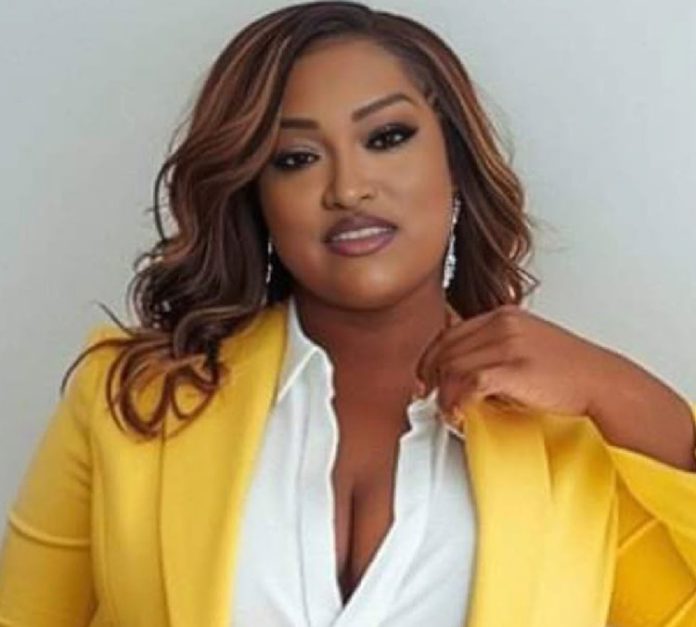
October 27, (THEWILL) – In commemoration of Breast Cancer Awareness Month, an occasion for raising awareness of Breast Cancer and sourcing funds for research into its cause, prevention, diagnosis, treatment and cure, Atinuke Lawal speaks with IVORY UKONU about her battle with breast cancer and how she triumphed over it. Excerpts:
How did you discover that you had breast cancer?
I discovered it on my own. I was at home that day. I hardly touch myself, but for some reason, my hand went there and I felt something like a peanut inside my skin. This wasn’t normal. Before then, I never met anyone that had breast cancer. I only know cancer starts with a lump. Of course, when you haven’t seen anyone literally go through the ordeal, you really won’t know what it is about. That moment cancer crossed my mind, I quickly dismissed it, believing that it wasn’t the disease but something else that would just fizzle away with time. I couldn’t touch it; I just took my mind away from it and didn’t bother again. About three days later, I still felt that it was there. And then I got worried, knowing that whatever was there, which didn’t fizzle away within three days, must be very unusual.
So, I searched Google. I wanted to know what it means to have a lump in the breast. Google said there were two types of lumps: the benign and the cancerous. But because I felt I was a very healthy person as I hardly fell ill and never had cause to be hospitalised for days except when I went to have children, I just categorised mine as not being cancerous. Now it was about the same time Ebola was reportedly brought into Nigeria by a foreigner. So it was a bit scary for me to attempt to go to hospital to check what the lump was about.

I just waited, hoping that the lump would fizzle away. After Nigeria was certified free of Ebola, I went to a hospital and got it checked. The doctor said he didn’t think it was cancer, but that I should do a mammogram. If you are over 40, you are told to do a mammogram and if you are less than 40, you are told to do a breast scan. I had just clocked 40 that year. So, I did a mammogram. But the mammographer also did a breast scan for me. Two weeks later, I got the result and I was told it was benign. I was relieved, but I was advised not to leave the lump lest it turns cancerous. So, I went for a lumpectomy.
At what point did you discover it was cancerous?
After the lump was removed, I was given the specimen to take for histopathology. Two weeks later, I collected the result of the test which was sealed and meant for the doctor, but out of curiosity while driving home in traffic, I opened it. I mean, why would anyone give me my own test result and ask me to take it to a doctor without me checking it. Boom! The first word I saw was ‘malignant’ and I immediately became jittery. I didn’t know what to do. I eventually reached out to the pathologist who conducted the test. I asked him if the lump was cancerous and he affirmed that it was. Now, if I wasn’t given the specimen personally at the hospital where I removed the lump and they had carried out the test on the specimen themselves, there was no way I would have been convinced that it was not exchanged for a specimen that wasn’t mine. Because how could I have done the first test and the result said it was benign only for me to have taken out the lump and another test revealed that it was cancerous?
So, you were misdiagnosed?
Yes. A lot of people have died in Nigeria because of wrong diagnosis. People do get tested and are given wrong diagnosis. And before they will realise what is wrong, they would have been far gone with their ailment.
Is it true you lived in denial after diagnosis for almost two years?
Yes, but it wasn’t intentional. I first noticed the lump around May/June 2014, just as Ebola reached Nigeria. For fear of contracting the virus, I avoided going to the hospital. By October, after Nigeria was declared Ebola-free, I went for a mammogram and the doctors recommended a lumpectomy. However, I didn’t have the procedure until November of that year at a reputable government hospital.
The experience of getting the lump removed was a sad one. Though I wanted to address the situation properly, I decided to leave the matter in God’s hands, knowing that pursuing it might cost some people their jobs. I was simply relieved to have the lump out and thought that would be the end of it. But shortly before Christmas in 2014, I received the devastating news that the lump was cancerous. I had no choice but to return to the same doctor who performed the lumpectomy, hoping he would interpret the results differently. Unfortunately, he confirmed the diagnosis and informed me that I would need to start treatment, followed by a mastectomy—the removal of my breast. I had always been self-conscious about the small size of my breasts, but after having children, they became fuller, and I was finally happy with how I looked. Now, I was being told that my breast needed to be removed. It was incredibly difficult to accept.
Did he discuss anything about chemotherapy with you?
No, he was more focused on surgery. When he mentioned a mastectomy, I just shrugged, left his office, went to my car and cried my eyes out. I tried to stay positive, but I had already decided that if I was going to get treatment, it wouldn’t be in Nigeria. After my experience with the lumpectomy, I concluded that we didn’t have professional doctors in the country. So, I began to prepare to travel abroad for treatment in January 2015.
However, my visa applications kept getting rejected—first by the United States Embassy and then by the United Kingdom High Commission. Meanwhile, time was passing and I didn’t understand the consequences of delaying treatment after the lumpectomy or after discovering that the lump was cancerous.
During this time, I was deeply depressed. To distract myself, I attended parties and surrounded myself with people to avoid feeling lonely. I tried to keep myself happy. But by November 2015, the lump had returned in the same spot and fear began to set in. I even attempted to travel to South Africa for treatment, but that plan also fell through. I was left with no choice but to wait, hoping for a miracle. In January 2016, something miraculous did happen.
I used to be the public relations officer of my old secondary school’s alumni association. A member of the class that was two years ahead of me had passed away from cancer, and as PRO, it was my responsibility to inform my set about the memorial lecture on cancer. I attended the lecture to represent my set, planning to leave before it started. But, by divine orchestration, I stayed. The lecture featured an oncologist from America, another from East Africa, the head of the Department of Oncology at Lagos University Teaching Hospital (LUTH), and Mrs. Betty Akeredolu, a breast cancer survivor and founder of the Breast Cancer Association of Nigeria (BRECAN). During the lecture, I asked if a mastectomy was necessary in all cases of breast cancer. The oncologist from America explained that if the cancer is caught early, it can be managed without a mastectomy, but if it progresses too far, removing the breast may be the only option. This gave me hope—I wasn’t ready to consider a mastectomy, so I clung to the belief that if I traveled abroad, I wouldn’t need to undergo the surgery. I collected the contact information of the resource persons at the lecture.
Ironically, two weeks later, in January 2016, I had another visa appointment at the US Embassy, but once again, my application was rejected. That was when I realized traveling was no longer an option. I decided to seek out the doctor from Lagos University Teaching Hospital, LUTH. I was prepared to walk away if he mentioned a mastectomy and surrender myself to fate.
When I saw him, he examined me and, noticing the lump, immediately recommended further tests to determine if the cancer had spread to my organs, given how long I had delayed treatment. To my surprise, the tests revealed that my organs were not affected and the lump had stayed in place without spreading. I began treatment immediately. So, from the time I first discovered the lump in May 2014 to January 2016, almost two years had passed before I finally started treatment, which I completed in August 2016.
Why do you think the lump returned after it was removed and how can one prevent it from happening?
After the first lump was discovered, I experienced two recurrences. Unfortunately, there is no way to prevent a recurrence. Cancer continues to grow, but it can be stopped with chemotherapy, an aggressive drug therapy designed to destroy rapidly growing cells. If the lump is small, chemotherapy can dissolve it; if it’s larger, chemotherapy may shrink it.
So why did you not do chemotherapy?
I did.
How did you then have a recurrence despite getting chemotherapy?
In fact, I underwent both chemotherapy and radiotherapy. In my case, the lump was dissolved and I assumed it was completely gone. I was supposed to have another surgery immediately after chemotherapy, but I didn’t. That could have allowed the cancer cells to grow back. If I had done the surgery, there likely wouldn’t have been a recurrence. However, I also believe the first surgeon might not have properly removed the initial lump. I later switched to a different surgeon who performed a procedure called wide local excision. This involved removing both the regrown lump and a large area of tissue around it. The surgeon dug deep into the spot to ensure that all remnants that should have been cleared in the first surgery were completely removed. Afterward, my breast was reconstructed. This was a significant risk—most doctors wouldn’t have taken that approach. Even abroad, they often suggest removing the entire breast in such cases.
How long have you been cancer free?
This year makes it 10 years since I got diagnosed with breast cancer, but I have been cancer free for eight years since the treatment.
How were you able to go through the trying period and who was your support system?
I would say that God was with me and my family during that time because I couldn’t fully grasp what was happening to me. Looking back, I didn’t realise I was sitting on a time bomb. Many people received their diagnosis after mine, but today, they are no longer with us. Those who could afford to travel abroad for treatment often returned and remained silent about their experience. Sadly, some weren’t fortunate enough to return and we only heard of their passing. Others, who couldn’t travel, would quietly put their affairs in order and wait for the inevitable.
How did Atinuke Cancer Foundation come to be?
During my treatment at LUTH, I witnessed many of the problems plaguing the Nigerian medical sector. There was a severe lack of equipment to treat cancer in Nigeria. During former President Olusegun Obasanjo’s administration, eight chemotherapy machines were brought into the country and distributed to eight teaching hospitals. However, after he left office, seven of these machines broke down, leaving only the one at LUTH operational—the very one I used for my treatment in 2016. This single machine was used by hundreds of thousands of cancer patients and it would frequently break down. If it failed during your treatment, which should only take a few days, you could end up waiting two months for repairs. They would salvage parts from the broken machines in other teaching hospitals to fix the one in Lagos. Seeing all this was eye-opening.
As I underwent my treatment, my journalistic instincts kicked in, and I began to document everything I observed about the state of the health sector. By the time I completed my treatment, I felt compelled to share my experiences. I published my first blog post and it garnered over 5,000 views—people were shocked by the conditions in the health sector. I also decided to give back to LUTH. Today, the cancer centre there looks more like a proper facility. Back then, it was a place of neglect, barely recognisable as a hospital. The hallways were so dark you needed a torchlight to walk through them. Cancer patients were supposed to have special reclining chairs for chemotherapy, as each session could last about three hours. Instead, we had to sit on old plastic party chairs with metal bars. The place felt abandoned, almost like a ghost house.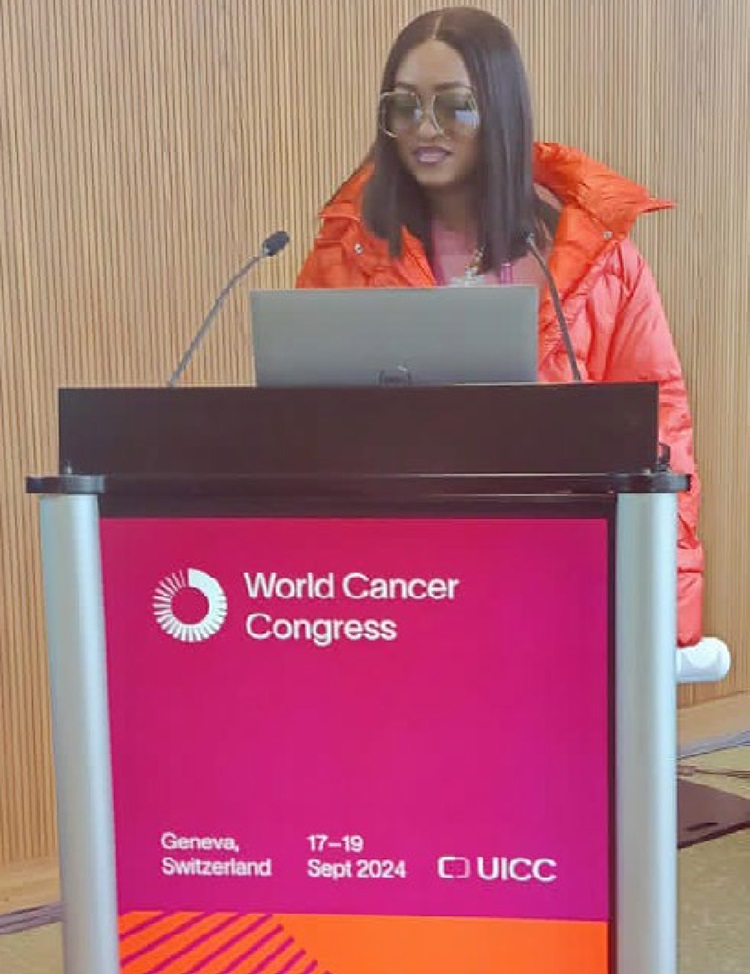
During the festive season, I took it upon myself to clean and decorate the space. I cooked meals and organised a small lecture to educate patients about cancer and advocate on their behalf, urging the government to address the state of the cancer centre at LUTH and other government hospitals. The doctors couldn’t speak out for fear of losing their jobs, which was understandable.
My initiative was an eye-opener for many, and it marked the beginning of the Atinuke Cancer Foundation—not something I had planned, but a response to the urgent need for change. I began advocating for breast cancer awareness through street campaigns, which gave people the courage to share their own cancer stories. At that time, cancer was heavily stigmatised, and people didn’t want to talk about it. If you mentioned you had cancer, people would avoid you like the plague. It carried a lot of negativities.
Today, people are more open and willing to discuss it. Thanks to the awareness we raised, three new chemotherapy machines were installed in Lagos, two in Abuja and the ones in other centres were repaired during President Muhammadu Buhari’s administration. Through my foundation, I’ve been able to impact many lives and I’m proud to have contributed to the gradual improvement in Nigeria’s health sector. It’s been a long journey, but I’m grateful to be part of this important work.
What lessons did you learn after discovering you had breast cancer?
I firmly believe that God gave me a purpose to fulfill. I feel He wanted to use me to deliver a message, especially because when I was diagnosed, there wasn’t a place to turn for firsthand information or support. There were no centres where people could gather, share experiences and learn how to face the challenges ahead. While there were cancer foundations, they weren’t as visible or active as some of the ones we have today.
My advice to others is to get educated about cancer and not just rely on assumptions or hearsay. Cancer doesn’t have to be a death sentence if you do regular health checks and take proactive steps toward treatment. Initially, I thought cancer was a stroke of bad luck, but looking back, it has brought more blessings than I ever expected. It has opened doors and given me opportunities I could never have imagined. It has projected my life and my purpose in ways I never thought possible.
You have a background in media and even had your own production studio. Is the studio still functional, what are you up to these days?
When cancer came into my life, I had to set my work aside. Cancer advocacy now consumes a significant amount of my time. It is so vast that it has become a full-time job in itself—requiring constant reading, learning, unlearning and relearning. There are always projects to plan and programmes to execute, all centered around raising awareness of cancer, learning new treatment methods, policy making, etc.
Also, I am currently writing a book about my ordeal. It will be launched before the end of the year so that as many people as wish to read about my full cancer story will have an opportunity to do so.
What will you say defines you more now after surviving cancer?
I have learned to take life easy and not to make things more difficult than they need to be. I’ve come to understand that if you have faith and believe in God, things will fall into place for you. Additionally, I’ve realized that going abroad or having money doesn’t guarantee survival from cancer. I made several attempts to travel for treatment, but it didn’t work out. Now, I can travel whenever I want as long as I have the funds.
Ivory Ukonu is a versatile journalist with many years of experience, with entertainment and society reporting as her area of core competence.