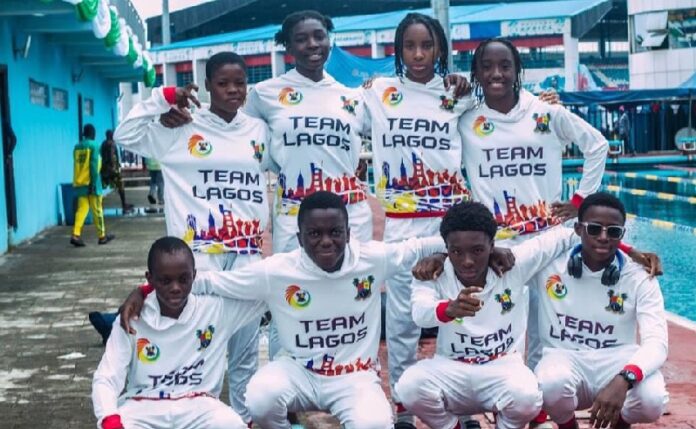
September 08, (THEWILL) — Team Lagos claimed the overall championship at the ninth National Youth Games in Asaba, Delta State, for the first time since the competition began in 2013. The event ended on Saturday, September 6, with Lagos claiming 110 medals, including 52 gold, 32 silver, and 26 bronze. This result ended Delta State’s run of victories in the previous eight editions. Delta State, the host, finished second with 114 medals: 37 gold, 38 silver, and 39 bronze. Edo State took third place with 79 medals: 33 gold, 18 silver, and 28 bronze. A total of 33 states and the Federal Capital Territory earned medals, leading to 802 overall: 246 gold, 236 silver, and 320 bronze. The games featured athletes under the age of 15 from all 36 states and the Federal Capital Territory competing in 37 sports at venues across Asaba, including the Stephen Keshi Stadium.
The closing ceremony took place at the Stephen Keshi Stadium, where dignitaries gathered to mark the end of the nine-day event. President Bola Tinubu attended through the Chairman of the National Sports Commission, Mallam Shehu Dikko. Delta State Governor Sheriff Oborevwori addressed the crowd and presented trophies to the winners. He praised the athletes for their efforts and called on the Commission to address age cheating to maintain the event’s fairness. Oborevwori noted that the games served as a platform for talent identification and national unity. The Director General of the National Sports Commission, Hon. Bukola Olopade, who chaired the organising committee, thanked participants and officials for their role in the success. A Talent Discovery Committee identified promising athletes for future national teams.
The National Youth Games started in 2013 under the administration of former President Goodluck Jonathan. The first edition occurred at the National Stadium in Abuja, with over 4,000 athletes from the states and the Federal Capital Territory. Cross River State won the inaugural title, followed by Akwa Ibom in second and Delta in third. The purpose was to identify young talents for national squads and promote unity among states.

From 2016 to 2021, Kwara State hosted five editions in Ilorin after an agreement with the Federal Ministry of Youth and Sports Development. Delta State won those events, including the 2021 edition with 60 gold, 27 silver, and 29 bronze medals. Lagos placed second that year with 19 gold, 26 silver, and 28 bronze, while Edo took third with 18 gold, 10 silver, and 11 bronze. Delta hosted the 2023 edition, delayed by national elections, and won with 41 gold medals. The 2024 games also occurred in Asaba, where Delta defended the title. This ninth edition marked Delta’s third straight hosting, with 6,382 athletes and officials registered through digital processes, though Gombe State did not complete its entries.
Lagos State Governor Babajide Sanwo-Olu praised the team for the victory in a statement on Sunday. He described the performance as historic and a sign of Lagos’s strength in sports. Sanwo-Olu planned to host the athletes for a celebration in the coming days. He thanked the coaches and the Lagos State Sports Commission for their preparation. Director General Lekan Fatodu credited the win to the governor’s support for grassroots sports. Fatodu noted that Lagos fielded athletes within the correct age groups, unlike some states accused of using overage competitors. Sanwo-Olu urged the young winners to stay disciplined and avoid injuries or distractions as they aim for senior levels. He also encouraged those without medals to train harder for future events.
The medal count built steadily over the days. Early results showed Edo leading on August 31 with 11 gold, five silver, and three bronze, ahead of Lagos with nine gold, four silver, and two bronze. Delta had two gold, two silver, and five bronze at that point. By September 4, Lagos held 61 medals: 33 gold, 15 silver, and 23 bronze. Edo had 41: 25 gold, nine silver, and 15 bronze. Delta followed with 59: 17 gold, 20 silver, and 22 bronze. Abia ranked fourth with 24: nine gold, eight silver, and seven bronze. On September 5, Lagos reached 69 medals: 35 gold, 18 silver, and 16 bronze. Edo had 46: 23 gold, nine silver, and 14 bronze. Delta had 51: 14 gold, 17 silver, and 20 bronze. Final tallies confirmed Lagos’s lead, with dominance in swimming (19 gold), gymnastics (four gold), boys’ volleyball, and other events like football, basketball, cycling, boxing, athletics, chess, and wushu-kungfu.
Several athletes stood out during the games. In swimming, Lagos swimmers won seven gold and one silver on September 1. Gymnasts from Lagos earned four medals: one gold, one silver, and two bronze in boys’ artistic events. In football, Lagos girls defeated Delta 5-4 on penalties after a 1-1 draw to claim gold. The boys’ team also beat Delta 1-0 earlier. In athletics, Udoh David from Akwa Ibom won the boys’ 400m in 47.78 seconds, a personal best. Goodnews Samuel Okon from Akwa Ibom took three gold medals. Hopi Onuoseke from Delta won the girls’ long jump at 5.59 metres, with Ella Udumebraye from Delta earning silver at 5.29 metres. In weightlifting, Edo swept nine gold in women’s events, led by Favour Cornelius, Esther Amarachi Chijioke, and Beauty Akpore, each with three gold. Oyo’s Fathia Owoyele Toluwalase won three silver in the 48kg category. In para-table tennis, Abia swept the men’s singles podium: David Emeka gold, Jaja Celestine silver, and Goodnews bronze. Chinenye Okoafor from Abia reached the women’s semifinals. In shooting, Opeyemi Tinunbu from Akwa Ibom won silver in female pistol with 498 points.
Other states recorded notable results. Kwara’s Haisat Abdulraheem won gold in girls’ squash singles, defeating Zainab Ishola from Lagos 3-1. Kwara’s six-year-old Abdulsalam Yusuf took gold in scrabble, the youngest competitor. Bayelsa won gold in male and female U-15 chess teams and individuals. Abia claimed gold in para-table tennis and weightlifting. Niger won the boys’ handball final against Delta. In karate, Anointed Nkemonso Isaac from Cross River earned the first gold in female minus 47kg kumite. Magdaline Inji from Nasarawa won her team’s first medal in a combat sport. Edo’s Desmond Izevbuwa Eroirewaen won gold in karate 50kg kumite. Ekiti’s Adedoyin Funbi took bronze in kung fu.
The games highlighted differences in state investments. Lagos’s success came from structured training and facilities under the Lagos State Sports Commission. Delta’s home advantage did not prevent the loss, despite strong showings in athletics and football. Edo led early in weightlifting and karate but fell to third. Only 29 states won significant medals, pointing to gaps in funding and preparation elsewhere. Some coaches raised concerns about overage athletes and biased officiating, especially favouring the host. Taraba’s sports director George Shitta claimed unfair decisions in chess and kickboxing denied his state medals. These issues threaten the event’s integrity, though no formal probes were announced.
The National Youth Games feed into Nigeria’s broader sports system. Past participants have joined national teams for events like the Olympics. The 2025 edition identified talents for future squads, aligning with goals for the 2028 Youth Olympics. Oborevwori and Olopade stressed the need for federal support to expand facilities and training nationwide. Sanwo-Olu’s plans for a parade and rewards in Lagos aim to motivate continued development. The event’s scale, with over 4,000 athletes in 37 sports, showed growth since 2013, but even participation remains a challenge for some states. Investments in grassroots programmes could address this and build a stronger pipeline for international success.
The ninth National Youth Games in Asaba confirmed the event’s value in talent scouting and state competition. Lagos’s breakthrough victory signals shifts in youth sports dynamics, driven by targeted efforts. With proper follow-up, the identified athletes could represent Nigeria on global stages. States must commit to fair play and funding to sustain progress. Nigeria’s sports future depends on such platforms to nurture the next generation of competitors.

Jude Obafemi is a versatile senior Correspondent at THEWILL Newspapers, excelling in sourcing, researching, and delivering sports news stories for both print and digital publications.