February 01, (THEWILL) — One hundred years after the first world championships were held in the English capital, the International Table Tennis Federation World Team Championships return to London with Nigeria carrying the hopes of a continent that has never been more strongly represented on the global stage. The draw, conducted on January 26 at The Shard, has set Nigeria on a challenging but navigable path through a tournament that will test the depth and tactical flexibility of African table tennis as never before.
The centenary edition, running from April 28 to May 10 across the OVO Arena Wembley and the Copper Box Arena, features 64 nations in both men’s and women’s competitions. For Nigeria, the stakes extend beyond national pride. Africa has sent 12 men’s teams and 11 women’s teams to these finals, the highest continental representation in the tournament’s history, reflecting a decade of investment in player development and international exposure. Nigeria and Egypt stand as the continent’s most credible medal contenders, and their performance will shape whether African nations secure expanded representation in future elite competitions.
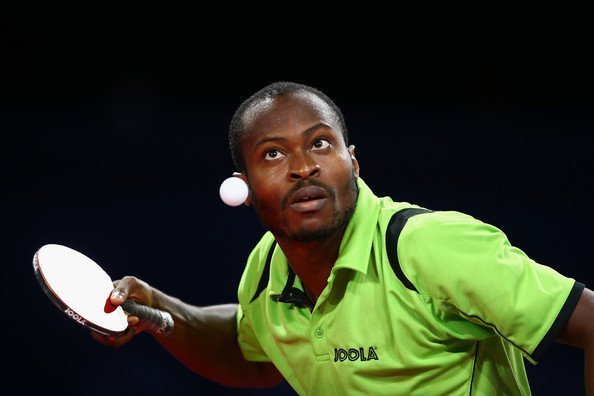
Nigeria’s men, ranked 24th globally, have been placed in Group 15 alongside Hong Kong, Saudi Arabia and South Africa. This draw affords both opportunity and peril. Hong Kong, seeded 21st and known for fielding quick, technically precise young players, poses the most formidable obstacle to Nigerian ambitions of topping the group. The tactical confrontation will likely centre on whether Quadri Aruna, Nigeria’s spearhead and the 23rd-ranked player in the world, can impose his powerful topspin game against Hong Kong’s characteristic close-to-the-table blocking and counter-attacking style.

Yet Aruna’s individual brilliance, honed through multiple Olympic campaigns and African titles, cannot alone guarantee team success. The three-match format demands depth, and the form of supporting players such as Olajide Omotayo and Taiwo Mati will prove decisive. If Nigeria’s second and third options can secure victories against lower-ranked opponents, it relieves the pressure on Aruna to deliver in every rubber. Historical data suggests Nigeria often begins championships with considerable energy but has struggled to maintain intensity when facing the relentless consistency of Asian powerhouses. Analysts estimate Nigeria holds a 70 to 80 per cent probability of topping Group 15, based on rankings and recent head-to-head records, particularly against South Africa.
South Africa’s inclusion adds a layer of continental rivalry. While Nigeria maintains a superior record against their southern neighbours, familiarity breeds few tactical surprises. Matches between the sides tend to be decided by individual moments rather than collective team superiority. Saudi Arabia, ranked 53rd, represents a more unpredictable challenge. Recent investment in coaching infrastructure and training facilities has transformed the Gulf nation into a rising force, capable of causing upsets in tightly contested encounters.
The women’s draw places Nigeria in Group 11 with Australia, Uzbekistan and Wales. This grouping appears more balanced than the men’s assignment, offering a realistic pathway to progression for a squad captained by Fatimo Bello, whose leadership and continental victories provide stability. Australia, seeded 16th, leads the group with consistent technique developed through Oceanic competition. Uzbekistan, ranked 63rd, offers less predictable play drawn from Asian circuits, while Wales brings European tactical discipline, though ranked outside the top 50.
The tournament’s three-stage structure amplifies the importance of group performance. The top eight seeds compete initially at Wembley in Stage 1A, whilst the remaining 56 teams, including Nigeria, contest Stage 1B. All teams progress to knockout rounds, but group results determine seeding and the difficulty of subsequent fixtures. A first-place finish grants a bye through preliminary knockouts and advantageous positioning for the round of 32. Second or third-place finishers must navigate additional matches, increasing both the number of games and fatigue risks before reaching the main draw.
For Nigeria’s men, finishing atop Group 15 is therefore imperative. A second-place finish would likely trigger an early knockout confrontation with a group winner from the top eight seeds, almost certainly meaning a clash with China or Germany before the quarter-finals. China, having claimed the last 11 world titles, remains the overwhelming favourite. Nigeria’s realistic ceiling appears to be the quarter-finals, matching their 2018 achievement, though progressing beyond that stage would require tactical adaptations and physical endurance that have previously proved elusive.
The women’s squad faces a narrower window of opportunity. A round-of-16 appearance seems the upper limit, given shallower squad options compared with the men’s team. Yet, Nigeria’s experience dominating African competition could yield upsets in individual rubbers against higher-ranked opponents such as Japan or Germany, should early knockout draws prove favourable.
Tactical preparation must address specific stylistic challenges. Against Hong Kong’s speed merchants, Nigeria requires precise serve and return patterns to impose their own tempo. Saudi Arabia’s developing power game will test defensive structures, whilst South Africa demands the assertion of continental dominance. The women’s matches against Australia will serve as a benchmark for readiness against elite opposition, whilst contests with Uzbekistan require adjustments to service variations honed in Asian competition.
Nigeria’s involvement in London reflects broader structural factors in global table tennis. African teams often navigate longer qualification routes than those entering via world rankings, a disparity that affects preparation time and competitive rhythm. The Nigerian men secured their place through 3-0 victories over Cameroon and South Africa at the 2025 Africa Championships in Tunis, where they ultimately claimed bronze after a semi-final defeat to Egypt. These continental battles, whilst valuable for building competitive edge, also reveal the depth of regional rivalry that Nigeria must first overcome before challenging global standards.
The dense tournament schedule, with multiple matches compressed into single days, will test physical conditioning as much as technical skill. Coaching staff will have to manage player rotations carefully to ensure lead athletes remain fresh for knockout rounds. The large Nigerian diaspora community in London is expected to provide vocal support, potentially offering a psychological advantage during crucial group fixtures.
With the championships returning to their birthplace, Nigeria stands at a crossroads. The talent exists within Aruna’s topspin arsenal and Bello’s steady captaincy. The question is whether supporting cast members can deliver when the pressure mounts, and whether the team can translate individual brilliance into collective results. For African table tennis, this centenary edition is an opportunity to demonstrate that a decade of development has genuinely closed the gap with the world’s elite, or to reveal how much ground remains to be covered.

Jude Obafemi is a versatile senior Correspondent at THEWILL Newspapers, excelling in sourcing, researching, and delivering sports news stories for both print and digital publications.