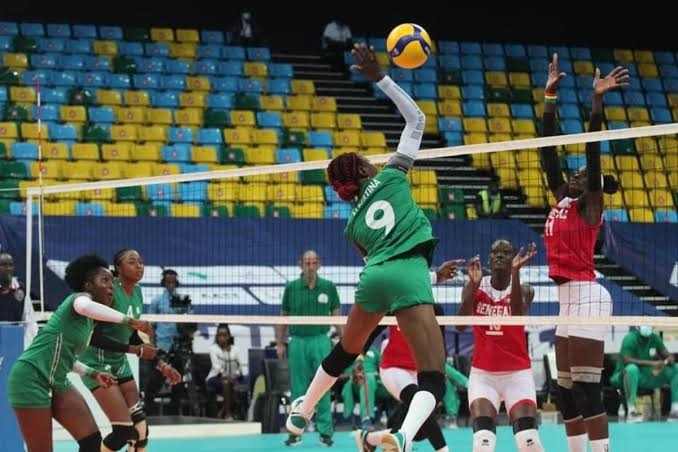
February 02, (THEWILL) — After several years of conspicuous absence from Nigeria’s sporting calendar, the Super Cup returned to the capital this week, marking what organisers hope will prove a watershed moment for volleyball in the country. Twelve elite clubs have descended upon the Indoor Sports Hall at Moshood Abiola National Stadium in Abuja and on Monday they will begin to tussle in a competition that the Nigeria Volleyball Federation sees as central to reviving a sport that suffered significant setbacks during the tumultuous period between 2020 and 2021.
The tournament, running until February 9, represents more than merely a return to normalcy. According to federation president Musa Nimrod, the Super Cup forms the opening chapter of what is expected to be one of the busiest competitive years in recent memory, with a beach volleyball championship in Kaduna and specialised military service competitions already scheduled for the months ahead. This intensive calendar signals a deliberate shift away from the prolonged periods of inactivity that previously hindered player development and eroded public interest in the domestic game.
The selection process for participating clubs reflects an attempt to balance competitive quality with inclusivity. The top three finishers from both the Premier Division and Division One in men’s and women’s categories earned invitations based on their previous season’s standings. In the men’s Premier Division, the Chief of Naval Staff Volleyball Club, Nigeria Customs Service Volleyball Club and Nigeria Correctional Service Volleyball Club will compete, whilst their counterparts in the women’s competition include teams from Customs, Naval Staff and the Chief of Army Staff. Division One representation extends the geographical reach, with clubs from Abuja, Kwara and Abia states ensuring that the tournament maintains a presence beyond the major administrative centres.

This heavy representation from military and paramilitary institutions underscores a fundamental reality of Nigerian volleyball. These service-backed organisations have provided the structural support and financial stability that civilian clubs often struggle to match. Nigeria Customs, in particular, has translated consistent institutional backing into tangible success, with their women’s team claiming victory at a championship in Ghana last November without dropping a single match. The federation’s reliance on these institutional teams highlights both the strength they bring and the developmental challenges facing grassroots volleyball across the wider country.
Technical preparations for the event concluded at a meeting on Sunday, where Adamu Tenimu, chairman of the League Management Committee, confirmed that arrangements covering security, medical services and officiating had reached satisfactory standards. The format follows established international practice, with pool stages leading to semi-finals and a final, whilst other participating teams will contest classification matches to determine overall rankings. Cash prizes await the top three finishers, with the champions also receiving the coveted Super Cup shield.
The tournament’s significance extends well beyond the immediate competition for silverware. For Nimrod and his administration, the Super Cup serves as a critical tool in addressing the talent gap that emerged during the sport’s recent difficulties. By creating a platform where elite athletes can maintain competitive sharpness against high-quality opposition, the federation hopes to identify and refine potential national team players capable of elevating Nigeria’s standing in continental and ultimately global competition. The stated ambition of Olympic qualification may seem distant given current realities, yet it provides a clear North Star for development efforts.
The choice of Abuja as host city carries both practical and symbolic weight. The Indoor Sports Hall has previously accommodated significant events, including national league finals and continental club tournaments, demonstrating adequate logistical capacity for multi-day competitions. More importantly, staging the tournament at the national stadium positions volleyball prominently within the public consciousness, particularly amongst young people whom the federation hopes to attract to the sport. Officials have appealed to local supporters to attend matches throughout the week, recognising that spectator interest remains crucial for long-term sustainability.
This emphasis on rebuilding public engagement speaks to broader challenges facing Nigerian volleyball. Whilst the sport has maintained a dedicated following in traditional strongholds, federation officials acknowledge that financial constraints and limited facilities in certain regions continue to impede growth. Nimrod has repeatedly called for increased investment from both government and private sectors, arguing that strong competitive performances can attract the support necessary to expand infrastructure and programming. The Super Cup thus functions partly as a showcase, an opportunity to demonstrate that volleyball merits greater attention and resources.
The tournament also reveals the federation’s strategic thinking about competitive pathways. By bringing together premier and Division One teams, the Super Cup creates opportunities for ambitious lower-tier clubs to test themselves against established powers whilst giving coaches and selectors a broader talent pool to assess. For younger players in particular, these fixtures offer invaluable exposure that might otherwise prove elusive within the regular season structure. Several club officials speaking to local media emphasised the developmental benefits of competing against strong opponents in quick succession, a challenge that requires both tactical preparation and squad depth.
Looking beyond the immediate competition, the federation’s packed calendar for 2026 suggests genuine commitment to creating the continuous cycle of activity that sustained volleyball requires. The beach volleyball championship and military service competitions planned for coming months should help prevent the dormant periods that previously allowed momentum to dissipate. Whether this ambition can be maintained given the financial and logistical realities of Nigerian sports administration remains to be seen, yet the mere fact of attempting such a comprehensive programme represents progress.
As matches commence this week, the federation faces a crucial test of its organisational capacity. A successful execution of the Super Cup, complete with qualified officials implementing international standards and appropriate medical and security provisions, will indicate whether Nigerian volleyball possesses the administrative infrastructure to support its competitive aspirations. For the players on court, the stakes are immediate and personal: reputation, recognition and perhaps selection for higher honours. For the federation, the implications extend considerably further. This tournament must demonstrate that volleyball can reclaim its place within the national sporting landscape, that years of difficulty can give way to sustained revival, and that the institutional commitment exists to transform ambition into achievement.
The 12 clubs assembled in Abuja carry that burden collectively as they compete for the Super Cup shield, knowing that their performances this week may well shape the trajectory of Nigerian volleyball for years to come.

Jude Obafemi is a versatile senior Correspondent at THEWILL Newspapers, excelling in sourcing, researching, and delivering sports news stories for both print and digital publications.