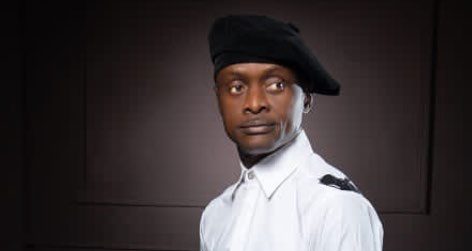
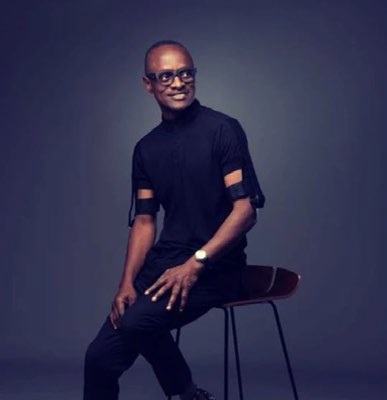
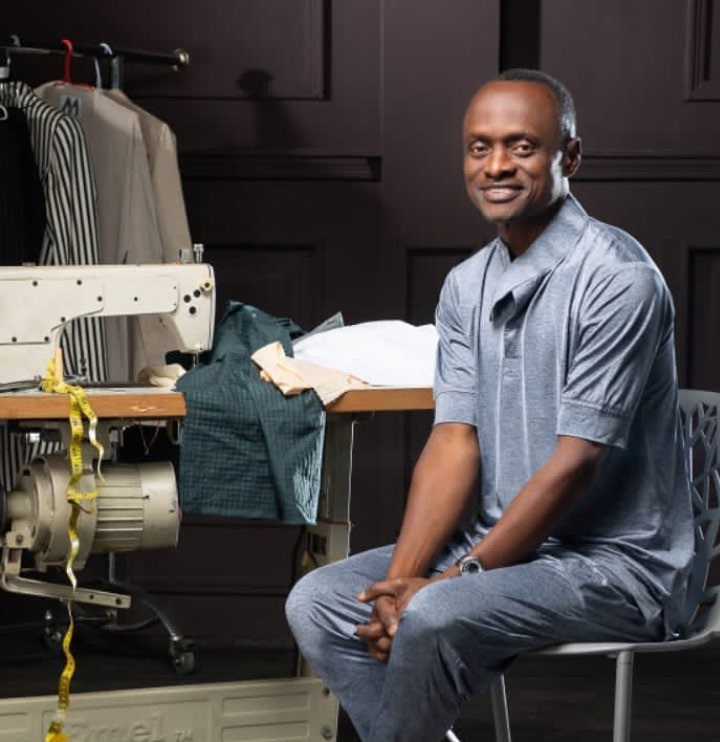
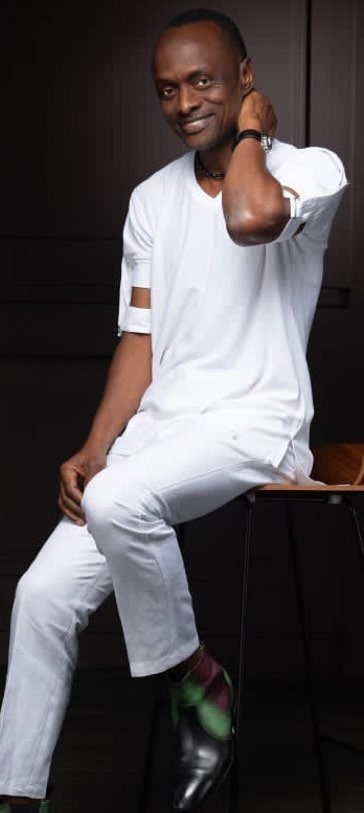
December 10, (THEWILL) – Mudiaga Enajemo, the first Nigerian fashion designer to make clothes for two African presidents and two prime ministers, is also the first designer to advertise his brand, MUDI Africa, on billboard and the first to build a fashion house in Africa. In this interview with IVORY UKONU, he speaks on his 30-year fashion design journey and some of the things that define him. Excerpts:
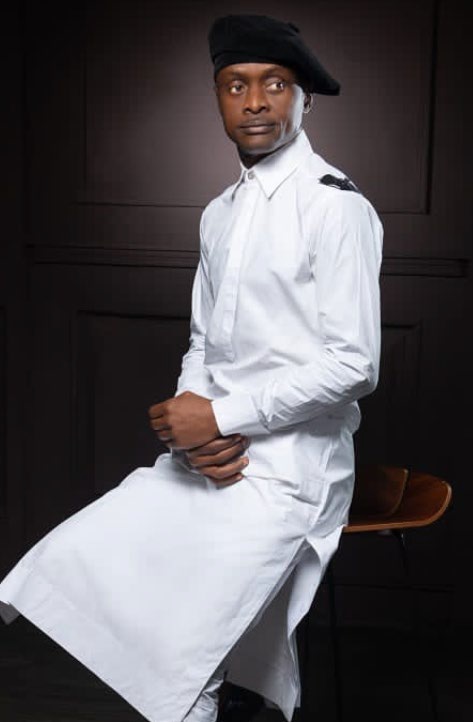
Your eponymous brand, Mudi recently clocked 30 years. How do you feel about it?

I thank God for the challenges. They helped to make me better. The drive. Drive is a personal thing. The talent. Talent is God given. I thank God for everything and above all, for being disciplined. Discipline is a personal thing as well. Without all of these combined, I do not think we would be having this interview. So, in anything you do, these three things will take you as high as you want. You must also have the passion for what you do. Passion and talent are the same thing. Actually, talent comes before passion. Some people are talented, but they lack the passion to work for the gift. So talent is number one, passion number two, drive number three and discipline is number four.
Nowadays not much is heard about your contemporaries: Larry Kay Ojomo, a.k.a Mon Ami; Ekuriese Akamune, a.k.a Kesse Jabari; and David Kolawole Vaughan, a.k.a Dakova. But you have successfully remained consistent with your craft and evolved with the times.
But that is life for you. They all tried at the time they reigned supreme. You know then, it was during the era of military rule unlike what we have now. Democracy brought about so much change. The market is much bigger now. When we started, there was no National Assembly, no Senate or Federal House of Representative. Fortunately, nowadays they all wear Nigerian clothes. So, the market is bigger now.
Democracy actually opened up the fashion industry and took it to another level. Important personalities, such as former President Olusegun Obasanjo and Dr Ngozi Okonjo-Iweala have been good ambassadors of the Made in Nigeria campaign. Both of them wear local Ankara clothes, especially Okonjo-Iweala. She’s a woman I adore, she’s a superwoman. It shows a lot of self-esteem. It’s what you have in your head that matters, not what you wear.
Yes, I am still here because I had and still have the positive mindset that it is possible, and that actually prepared me from the beginning. It is possible! I never even used the word like ‘I go make am.’ That’s a bit too arrogant and overconfident. That’s not too good. I just kept the positive mindset that it is possible. Even as I’m sitting down now, my mind is still telling me that it is possible, just keep working.
What made you think it was possible?
It was just self-belief. It is very important to believe in yourself. You must have that self-confidence and belief in yourself. You must have faith in what you do. It matters a lot. There are talented people, but they don’t believe it is possible. You have to believe first and then it will give you the courage to try, knowing that one day the light will shine. So, that first confidence would give you the much-needed push.
Would you then say that drive and passion have kept you going?
Yes, talent, passion, drive and discipline. At this level, I still go to work at 7 O’clock in the morning. It’s just part of me. Most times, I use myself to reflect on how life really is. I’m not perfect. What you get out of life is what you put in it. There are designers, there are tailors and entrepreneurs, different categories of people. There are people who are into fashion design, some of them are gifted and they can create. Some can’t create, yet they are tailors. Others are not tailors and they can’t create, but they are entrepreneurs. They just assemble tailors somewhere to start making clothes.
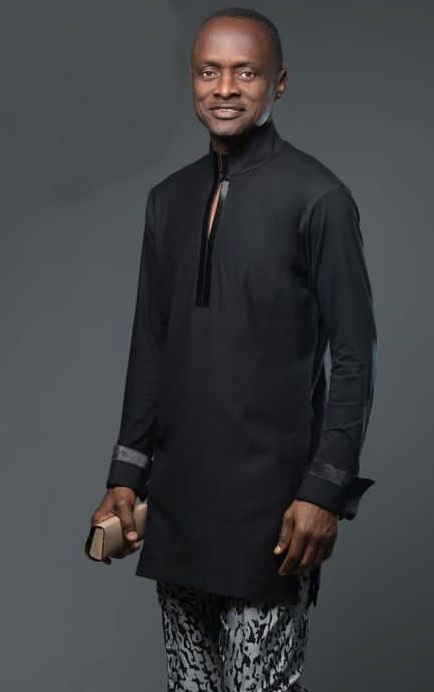
What category do you fall into?
I am a designer. I don’t need people to tell me what to do. Unfortunately, a lot of people don’t know the difference between designers, entrepreneurs and tailors. A designer creates, a tailor works under a designer or just gets ideas from magazines, while an entrepreneur just owns the business. Sometimes they don’t even know how to do many things. I would never duplicate a design by another person, no matter how much you pay me because I am a designer and I create, except I’m not creative. I create my own. I would not duplicate. Even if you change the colour, I would not. I don’t even keep designs because it is repetition. I move on. If I make three particular designs in Lagos, I make three different ones for Abuja and different ones again for Ghana. I would modify it, if you request the same thing. There has to be a bit of twist, but you’ll get what you want. That’s just me and that’s what I’m known for.
But you’re also an entrepreneur because you market what you design
I see myself as a designer, not a businessman. I’m an artist expressing myself through fashion. If you say I’m an entrepreneur, it’s a compliment. I’ll accept it. It’s okay, but first of all I see myself as a designer.
Where do you see yourself in the next 30 years? Do you see yourself still creating designs or are you going to retire?
No, I pray I’ll still be doing fashion because this is my life. All I do is fashion. For 30 years, I’ve been doing just one thing and it’s not easy in this environment. My lifestyle and the way I’ve been living my life is through fashion. People think some other things. They think I’m into money laundering or politics. Some say I’m into hard drugs. People just say all kinds of things they don’t know because they don’t know my lifestyle. Sometimes I may not have up to N1 million naira in my bank account, but my lifestyle makes it look that way. I’m just living my life the way I want it. Contentment is important. I’m not desperate to acquire wealth, but with the little I have and the way I package myself, people would think I have a lot. I’m working because I have to work to live and if money comes fine.
What did you want to do before venturing into fashion?
Nothing. This is what I have always wanted to do.
Well, something or somebody must have inspired you. Was it your father, mother or a close relation? You must have looked up to someone before
Not really, but there are people I look up to. It is difficult to have role models in the society today because people change either because of politics or one thing or another. That is humans for you. But there are people that I look up to. The way they live and do their business makes me look up to them.
I look at contentment when I judge. I’ll mention names. For instance, people like John Momoh of Channels Television is one man I look up to; Biodun Shobanjo of Insight Communications; Larry Izamoje the owner of Brilla FM; Chief Agofure, the owner of Agofure Transport, is another person I look up to. I look up to them because they do their things professionally, they focus on their own things and they are people of substance. I’m not saying they are perfect; they have their own shortcomings. I don’t look at money; I look at character. Over the years, we have changed our values. People look at me and say I’m rich. No, that’s not the way to judge people. I apply a bit of old and modern to the way I live my life and I look back to where I’m coming from.
What would you consider the highlights of your 30-year career?
I would mention like five for you. I’m the first Nigerian designer to advertise on billboard, it’s on record. I’m the first to advertise on television. I’m the first designer to design for a foreign president, the record is there. I’m the first to open an outlet outside Nigeria. I have four outlets outside Nigeria, there were five, I shut one down. I’m the first to have a purpose-built fashion house not only in Nigeria but in Africa, televised by African magic and it happens to be the finest in Africa. Purpose built fashion house not rented, purpose built for fashion, the first. I’m the first to have branded vehicles for my fashion brand. All my outlets outside Nigeria are attached with official branded cars.
What prompted you to start expanding to other African countries?
Fashion knows no language, fashion is universal. It doesn’t speak languages. If you’re limited, your brand will die. You have to spread out to reach other people. Whether you like it or not when it comes to fashion, Nigeria is number one in Africa and our diversity helps us to create designs. Africans now wear more African clothes. So the market is expanding.
How are these outlets doing? Can you mention the countries they are located in?
By the grace of God, they are doing well. Ghana and Ivory Coast are doing well. They are just picking up because it’s been three years. Kenya is doing well, too. South Africa is still there, but it is a bit shaky because of Xenophobia.
Which outlet did you shut down and why?
Senegal didn’t do well at all, so I shut it down.
Any regret going to Senegal?
No, regret at all. People should learn. We have to keep learning. We make mistakes to learn.
Is there anything you feel you should have done better in your 30 years as a designer?
I would say my Senegal outlet. I didn’t really study the market before I entered. That is my only regret. I spent so much money to get a shop, get a car and everything and I had to let go.
Would you like to go back there?
Yes, by the grace of God. Senegal would still be a part of MUDI Africa.
You’re not getting any younger. Who are you grooming to take over your business after you retire?
In life just do the best you can because it is difficult to pull in people. If you pull in the wrong person, they can pull you down. I won’t say more than that. I do the best I can because it’s difficult to manage the human mind. It is only your mind you know. I try to be upright because I am not perfect. I just do the best I can. Like they say, ‘a man who dictates the journey, backs the crowd.’ If I’m pulling you along with me and you think that your mindset or your mentality is different from mine, I let go because I have to keep working. If I keep waiting on you, it will distract me. The day I stop thinking would be the end of MUDI. So, I have to keep thinking.
How would you compare the Nigerian fashion industry today with what you met when you started?
Fashion is evolving. I thank God for the journey because if I check the clothes I made 15 years ago, the difference is just too much. As you make, you learn from your mistakes and keep working and innovating. I would say that we are getting it right. First of all, we have our way of dressing, in terms of creativity, it’s improving in several ways. And people would say we have more designers everyday, but what they don’t know is that the more there are, the better. Yes, where there are more designers, there’s bound to be competition. But if there’s no competition, the industry will be stagnant. Competition drives innovation. We are trying, compared to other countries, but there’s still room for improvement. Mind you, we are working from a disadvantaged position. We are battling with irregular electricity supply and other negative factors. The issue of human resources is there. There are family issues and unfavourable government policies to deal with. In fact, we are working against all odds. But we have to keep working.
Speaking of government policies, in what ways has the government supported the fashion industry?
Most times, the support we get, we see it through seminars, conferences, exhibitions. There are no grants. Imagine that I am paying salaries and my workers are paying tax to government, but there are no grants. In 30 years, I’ve never for received a grant from any government, whether federal or state.
Did you try to apply?
I’m not a businessman. There are many things that can frustrate and make one want to give up. Some years ago, when I wanted to expand my business, I approached a bank. I was asked to fill a lot of formal documents that made me eventually walk away because the lady asking me to fill the forms did not understand where I was coming from.
Why didn’t you ever set up a fashion school?
Good question. You know, in life, you take your things step by step. I had it in mind to do, but like I said, it’s one step at a time. When people come to me, I refer them to other tailors for training. It is giving back, but until I set up one, I’ll just keep doing this.
Do you have mentees?
Yes, I talk to them and I advise some. They call me when there’s a bit of mistake on their part. Again, it’s like giving back. For me, when I started nobody actually advised me, I was just on my own, but I was focused.
Do you belong to any fashion group?
Yes, I am a member of the Fashion Designers Association of Nigeria (FADAN), but I hardly attend their meetings.
I’m looking at a picture of where you started from humble beginnings in 1993. Were you living there?
Yes, I lived there. I started sewing clothes from the one-room apartment in Ketu area. The house is still there. One day I took my daughter there to show her where I started from because we must start from somewhere. That is the story of life.
When you started there, were you not discouraged?
No, I wasn’t discouraged. When I started, I was not discouraged, I only had one sewing machine and one tailor.
Did the tailor live with you?
No, he just came and went. People would come there with materials sometimes. Because there was no mobile phone at that time, I would go to offices to meet people who had materials they needed to sew and the tailor and I would produce something for them.
At what point did you have your breakthrough?
My story is that I just kept working. When I started advertising on billboards, it actually propelled me in a way and it helped the brand. When I started opening outlets outside Nigeria that also helped.
You’ve made clothes for some African presidents
Two presidents and two prime ministers. I have not made clothes for any Nigerian president, but I have made some for several federal ministers. I made clothes for the King Mohammed VI of Morocco. I didn’t know him from anywhere. He was in Abuja and he came to Lagos to spend one week and asked to visit five places in Lagos; Mudi Fashion House, Silverbird Cinema, Femi’s Shrine and two art galleries, one of which was Nike Art Gallery. He was staying at the Intercontinental Hotel in Victoria Island, Lagos.
The monarch arrived in my premises with a 50-man entourage made up of his security details and aides plus some of his Nigerian hosts. I took him round the building and he chose his designs. He was so impressed he invited me to his hotel for a private dinner. He ordered over nine pieces and gave me three days to deliver which I promptly did working overnight all of those days. When he was leaving, I told him I wanted to come to Morocco on a visit and he gave me his personal assistant’s number to keep in touch. Unfortunately, when I visited Morocco, he was away in Saudi Arabia, so I didn’t see him, but he ensured that my stay was memorable. His PA got in touch with me, asked me to send my passport and gave me a first-class ticket.
I was in Morocco for about two weeks, I spent two days in the best hotel and visited a lot of places with everything paid for by the King. The king got me picked up directly from the airport tarmac when I arrived in the country.
No doubt, the fashion business has been good to you
Yes, through my craft I’ve met people and it has opened doors for me.
What would you say has significantly shaped you to be who you are?
I would say it is the value I grew up with. Values matter a lot, they shape your life. Sometimes it’s not about education or whether you are a professional. It’s the values, contentment, hard work, believing in yourself, then cleanliness. I don’t joke with cleanliness. If I want to be impressed by your way of life, I would be impressed if you are clean and hardworking. These two things are in the Bible: Cleanliness is close to Godliness and also hard work.
You are a recipient of so many awards. How many awards do you have in total?
I don’t even know.
Which of your awards means the most to you?
All of them mean something to me. No matter how small or how big, all of them matter because you must appreciate and value the little ones, as well as the big ones.
You’ve maintained your physique for so long. What is your secret?
This has been my lifestyle for as long as I can remember.
Are you a vegetarian?
No, I eat and drink anything apart from beer. People have a lot of perspectives about me, be it food or anything. People even say I’m gay because they don’t see women flocking around me, but those that are close to me know the difference. Na man I go like? No be woman born my children?
You shielded your family from public scrutiny
It is deliberate, for my sanity.
How would you define your style?
Simple. My style is just me. I don’t go outside fashion rules. I combine the old and modern to live my life. There is liberty, there’s freedom but there’s also limitations to freedom.
You’re not really into fashion shows, are you?
I mean, it’s been 30 years and I’ve done a lot of fashion shows. I can’t just do fashion shows for the sake of it, there must be a reason. Is it for the sake of views? What are you selling?
After 30 years of being in the fashion industry, do you feel intimidated by any designer?
Never, we all have our individual strengths.
How do you unwind when you’re not working?
I go out just to listen to music and go back home, but the job is enough for me, I enjoy it. I go to parties and hang out with friends. I work every day except Saturdays and Sundays, but I travel out of Lagos for ceremonies. I hardly go to clubs. I started life very early and got exposed at a very early age.
Ivory Ukonu is a versatile journalist with many years of experience, with entertainment and society reporting as her area of core competence.