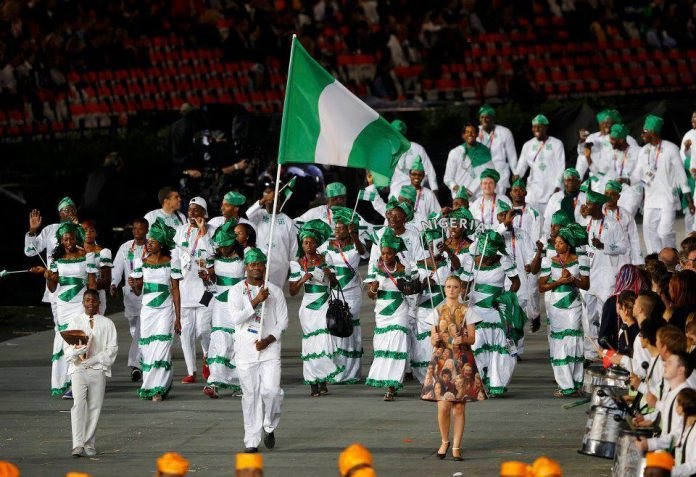
November 03, (THEWILL) — When 46 members of Team Nigeria departed Lagos on Saturday morning, bound for the Sixth Islamic Solidarity Games in Riyadh, they embarked on a journey that extends well beyond a fortnight of competition in Saudi Arabia. The 35 athletes and 11 officials travelling to the Games, which run from November 7 to 21, represent the opening phase of a carefully constructed pathway towards the 2028 Olympic Games in Los Angeles. According to Bukola Olopade, director-general of the National Sports Commission, the NSC has positioned this trip as a strategic testing ground where athletes will face regional rivals, support systems will operate under genuine pressure, and selection decisions for future competitions will begin to take shape. For Nigeria, competing across seven sports, Riyadh offers both immediate opportunities and long-term implications that will resonate through the next Olympic cycle.
The preparation for this moment began with an advance party departing Lagos on November 1, tasked with smoothing the logistical wrinkles that have derailed previous campaigns. Travel disruptions in Turkey three years ago left athletes jet-lagged and under-prepared, accommodation mix-ups cost valuable training time, and the lessons learnt were expensive ones. This time, Olopade, who doubles as the chef de mission, has ensured technical staff arrive early to finalise entries, secure training venues, and navigate the cultural terrain of competing in Saudi Arabia. The main contingent follows on Saturday, though Nigeria’s boxers will face their first tests even before the opening ceremony, with preliminary bouts scheduled from 4 November that will set the tone for everything that follows.
The Islamic Solidarity Games gather over 3,000 athletes from 57 member states of the Organisation of Islamic Cooperation, creating a crucible where regional rivalries simmer beneath the veneer of sporting brotherhood. This edition features 21 sports and two para-sports across venues in the Saudi capital, a programme blending Olympic-standard disciplines with events reflecting Gulf sporting culture. The seven sports Nigeria will partake in include athletics, para-athletics, para-powerlifting, weightlifting, wrestling, boxing, and taekwondo. For the country’s athletes, the stakes extend beyond medal tallies into the realm of strategic positioning. Olopade has framed the Games as integral to Olympic planning rather than a standalone achievement, emphasising that every race, bout, and lift provides data for selection panels and tests support systems under genuine pressure.

Nigeria’s journey through these quadrennial Games charts a story of gradual ascent from modest beginnings. The inaugural 2005 edition in Saudi Arabia yielded little, but by 2013 in Palembang, medals in wrestling and taekwondo suggested emerging potential. Baku in 2017 brought six medals, with weightlifting and para-powerlifting athletes lifting records that announced Nigeria’s arrival in strength sports. The breakthrough came in Konya, Turkey, in 2022, where 11 medals, including three gold, placed the team 24th overall despite funding constraints that would have crippled less determined campaigns, exemplifying the technical excellence Nigerian athletes can achieve when preparation aligns with opportunity.
This year’s contingent reflects both continuity and calculated evolution in selection strategy. Wrestling fields five athletes across freestyle categories, each drawn from September’s national championships where takedown techniques and tactical awareness were scrutinised as rigorously as physical conditioning. Taekwondo sends four competitors whose continental qualifier performances showed the speed and precision demanded by international rules, whilst the weightlifting squad of four operates under programmes aligned with International Weightlifting Federation standards, incorporating mobility work designed to prevent the injuries that have previously ended promising careers. Para-powerlifting contributes three bench-press specialists.
The largest contingent comes from athletics and para-athletics, 15 athletes covering sprints, hurdles, and throws with a blend of youth and experience that coaching staff believe offers the optimal balance between current capability and future potential. Gafari Atanda Badrus enters the men’s 400 metres having recently broken the 46-second barrier, a time that places him amongst regional contenders, whilst para-athletes competing in classifications from T11 to T38 will test themselves in shot put and javelin against opponents whose funding often dwarfs Nigeria’s. Boxing presents perhaps the rawest test, with both of Nigeria’s male and female competitors having qualified through the African Championships.
These athletes embody realities that statistics alone cannot capture. Many juggle training with university courses or employment, surviving on federation stipends that barely cover the physiotherapy and sports psychology that wealthier nations provide as standard. A Lagos boxer’s routine, detailed in a recent federation update, begins with pre-dawn roadwork and continues through ring sessions until evening light fades, a grinding schedule that leaves little room for the recovery protocols elite sport demands. Para-athletes face compounded challenges, equipment costs creating barriers that recent commission grants have only partially addressed, yet their commitment remains absolute, driven by the knowledge that opportunities like Riyadh come rarely and must be seized completely.
Athletes receive cultural briefings covering Saudi customs, prayer times, and dress codes, reducing the friction that cultural misunderstandings can create. Training has focused heavily on heat acclimatisation for Riyadh’s climate where temperatures touch 35° Celsius, conditions that can sap strength and concentration from the unprepared.
The commission has set a target of 15 medals, double the Konya haul, focusing particularly on weightlifting and wrestling where Nigeria’s technical strengths have historically compensated for resource disparities. Turkey, collecting over one hundred medals last time, and host Saudi Arabia, backed by infrastructure investment that transforms sporting landscapes, represent formidable opposition. Yet combat sports remain arenas where Nigerian athletes consistently deliver beyond expectations, where strategic intelligence and psychological resilience can overcome material disadvantage, and where individual brilliance can illuminate shortcomings in systemic support.
Beyond immediate medal counts, Riyadh serves multiple strategic purposes within Olympic planning. Strong performances boost world rankings that determine qualification pathways, strengthen funding applications to government and corporate sponsors, and provide direct Olympic entries in certain disciplines. The commission has integrated wearable technology data to refine tactical approaches, particularly pacing strategies in athletics heats where misjudgement costs seconds that separate medallists from also-rans. Officials will be required up compile detailed reports on recovery systems, nutrition plans adapted for halal requirements, and competition delivery under genuine pressure, documentation that will inform training camp design and athlete selection for years ahead.
The staggered competition calendar spreads events across the fortnight, team sports commencing early and athletics scheduled from November 17, allowing coaches to rotate athletes in multiple events and build momentum through early successes. Corporate sponsors, including telecommunications firms, have offered performance bonuses that add financial incentive to national pride, whilst the Games present diplomatic opportunities for cultural exchanges potentially leading to joint training camps with peers from the Organisation of Islamic Cooperation. Based on results from recent competitions, there is the expectation of particularly strong showings of Team Nigeria in para-events where the country ranks highly across Africa, performances that can secure Olympic spots whilst elevating domestic leagues starved of international success stories.
The challenge now is maintaining focus across a fortnight where individual triumphs and disappointments ripple through team morale. Boxing’s early start on November 4 provides immediate tests before the opening ceremony’s pageantry on the seventh, when national anthems and flag parades briefly suspend competition’s harsh judgements. Wrestling mats and taekwondo dojangs follow in quick succession, each bout a chance to build confidence or expose weaknesses, before athletics closes the programme with sprint finals under floodlights that will capture whether months of preparation have produced the marginal gains that separate medals from near misses.
What unfolds over these 14 days will echo through Nigerian sport long after results fade from headlines. Selection panels will scrutinise performances for signs that training programmes are producing athletes capable of competing strongly against regional rivals, whilst para-sport results will reveal whether support networks for athletes with disabilities match rhetoric with resources. The data gathered, the lessons learnt, and the experience banked will shape decisions about coaching appointments, facility investments, and athlete pathways as Nigeria builds towards Los Angeles. For 35 athletes carrying national expectations and personal dreams, Riyadh represents both destination and departure point, a stage where years of sacrifice meet the unforgiving clarity of international competition, and where the answer to Nigerian sport’s perennial question, whether talent can triumph over constraint, will be written in sweat, tears, and the cold mathematics of the medal table.

Jude Obafemi is a versatile senior Correspondent at THEWILL Newspapers, excelling in sourcing, researching, and delivering sports news stories for both print and digital publications.