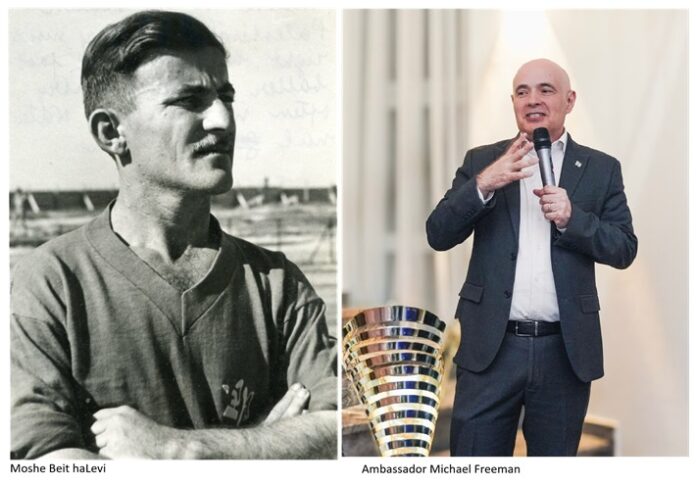
November 24, (THEWILL) — In the conference room of the Israeli Embassy in Abuja last Saturday, Ambassador Michael Freeman stood before an audience that included some of Nigeria’s most celebrated footballers. His purpose was to honour a man who a few people in the room could recall: Moshe Beit haLevi, the Israeli coach who managed Nigeria’s national team in the turbulent, hopeful months following independence in 1960.
There were speeches, polite applause and the unveiling of a commemorative plaque. Yet for those paying close attention to the currents of modern sports diplomacy, the gathering offered considerably more than nostalgia. It presented a template for how Nigeria might finally professionalise its sports sector through international partnerships built on substance rather than sentiment.
Beit haLevi, known to his players as Jerry, arrived in Lagos in October 1960 with tactical diagrams and a reputation earned at Maccabi Tel Aviv, where he had secured league titles throughout the 1950s. His first match in charge proved disastrous. Ghana thrashed Nigeria 3-0 before 100,000 spectators in the Nkrumah Cup Final and the local press demanded his immediate dismissal. The West African Pilot questioned why the newly independent nation had turned to an Israeli when local talent existed. Yet the Nigeria Football Association held firm, recognising in Beit haLevi something the country desperately needed: Someone who understood that technical excellence required structural discipline.

What followed offers a case study in how patience and professionalism can transform raw talent into something coherent. Beit haLevi insisted on boots for all players, drilled the team in the 4-2-4 formation and emphasised passing over individual runs. More significantly, he fought for players to be paid when training sessions increased from two to three times weekly. This seemingly modest innovation represented the first attempt to introduce labour relations into Nigerian football, treating players not merely as talented subjects but as professionals deserving wages for their work. By November 1960, results improved. Nigeria beat Egypt 2-1, and the journalists who had demanded Beit haLevi’s head, praised him for replacing wild and bushman football with controlled play.
The Israeli’s tenure closed in 1961 with a modest record of four wins, five draws and three losses, but the numbers miss the point. He had introduced a level of rigour that survived his departure, laying foundations upon which later coaches would build Nigeria into a continental force. This context explains why Ambassador Freeman chose to revive Beit haLevi’s story now, 65 years after the coach left Lagos, largely forgotten. Freeman, who took up his post in 2023, discovered the connection whilst reviewing embassy archives on bilateral ties established at Nigerian independence. He saw an opportunity to transform a historical footnote into something more useful: a bridge towards renewed cooperation in an area where both nations could benefit.
The event drew considerable star power. John Fashanu, the former Wimbledon striker whose Nigerian father shaped his dual heritage, spoke of the irony that an Israeli had laid foundations for the flair that would define later Nigerian stars. Beside him sat Nwankwo Kanu, the Arsenal forward who captained Nigeria to Olympic gold in 1996, and Daniel Amokachi, whose powerful performances at Everton made him a household name in the 1990s. Their presence lent legitimacy to Freeman’s initiative whilst creating a link between different eras of Nigerian football, making the gathering part memorial and part conversation about what comes next.
That question of substance over ceremony matters because Nigeria’s sports sector stands at a crossroads. Shehu Dikko, chairman of the National Sports Commission appointed in 2024, has articulated a vision that treats sports not as recreational pastime but as measurable contributor to national GDP. His target sits at 3% of the economy, an ambitious figure that requires more than local enthusiasm. It demands technical sophistication, structural discipline and international leverage of precisely the kind Israel represents today. Dikko told the gathering that football unites Nigeria often more effectively than politics, and he pledged support for joint initiatives. His endorsement signals government buy-in that could unlock funding for genuine partnerships rather than diplomatic gestures.
This is where the historical parallel becomes instructive. Israel in 2025 is not merely a nation with football heritage but a global power in sports technology. Tel Aviv hosts companies like Playermaker, which revolutionised academy training through boot-mounted sensors, and WSC Sports, which uses artificial intelligence to automate highlights and monetise content for leagues worldwide. For Nigeria to actualise Dikko’s “Sports as Business” mandate, access to such technology becomes essential. The country possesses abundant raw talent, as the presence of Kanu, Fashanu and Amokachi attests. These men conquered Europe because they were eventually exposed to elite technical structures. The goal must be to domesticate that framework rather than continuing to export talent for refinement elsewhere.
Freeman outlined plans for referee training and youth exchanges, framing them as steps towards deeper cooperation. The embassy also announced the Moshe haLevi Champions Cup, a youth tournament set to begin that weekend. These initiatives sound promising, yet the need exists to distinguish between ceremony and programme. Public commemoration carries meaning when it honours those who contributed to sporting culture, but the value for bilateral relations increases when linked to clear, measurable plans. Diplomatic statements about commitment require follow-through in the form of coaching clinics, formal exchange visits, donation of training equipment or technical partnerships with national sports bodies. At this point, it is merely about intention and goodwill without detailed formal agreements or project timelines.
Nevertheless, the potential exists for something substantial. Israel and Nigeria established diplomatic relations in 1960, the same year Beit haLevi arrived, and Israeli experts assisted in agriculture, health and education during the early independence period. Nigeria severed formal ties following the 1973 Yom Kippur War, restoring them only in the early 1990s. Trade volumes reached $250 million before regional conflicts disrupted flows, and cooperation now extends to security dialogues and professional training programmes. Sports fits naturally into this pattern, offering neutral ground where practical gains become possible without overt political pressure.
As the event concluded and guests departed into Abuja’s evening traffic, the question lingered whether this gathering would generate substantive sports partnerships or simply add another pleasant memory to the capital’s social calendar. Beit haLevi left Nigeria in 1961 after disputes over pay and selections, returning to Israel without fanfare. He died in 1997 aged 84, believing his work forgotten. Freeman’s initiative provides belated acknowledgement, yet the most fitting tribute would involve ensuring that the professional standards Beit haLevi fought for finally become codified in practice. The ball now sits in the court of the National Sports Commission, which must decide whether it wants friendship based on past memories or partnership built on future innovation.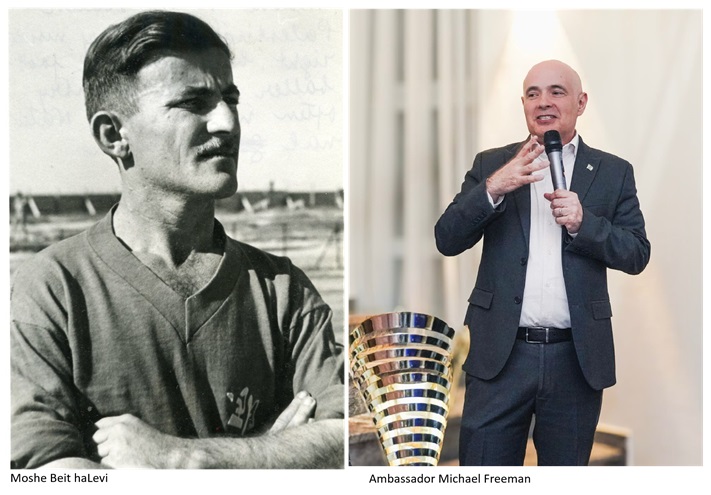

Jude Obafemi is a versatile senior Correspondent at THEWILL Newspapers, excelling in sourcing, researching, and delivering sports news stories for both print and digital publications.