January 26, (THEWILL) — When the Bayelsa United team bus suffered a tyre failure on the Abuja-Kano highway last Friday, the swift response of the driver prevented what could have been another catastrophic entry in Nigerian sport’s growing ledger of road tragedies. All players and officials walked away unharmed, but the incident has thrown into sharp relief a pattern of crashes that continues to claim the lives of athletes, coaches and support staff travelling to competitions across Africa’s most populous nation.
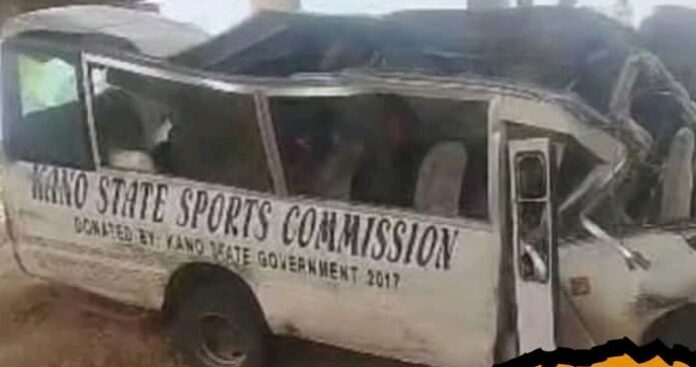
The relief felt by Bayelsa United stands in stark contrast to the devastation that befell Kano State’s sporting community eight months earlier. On 31 May 2025, a bus carrying more than 30 people plunged off the Chiromawa Bridge on the Kano-Zaria expressway as the delegation returned from the 22nd National Sports Festival in Ogun State. The crash killed at least 21 people, including the public relations officer of the Kano State Sports Commission and a photojournalist from Express Radio. Investigators attributed the accident to a lethal combination of driver fatigue and excessive speed following an overnight journey. Governor Abba Kabir Yusuf declared 1 June a day of mourning and provided one million naira to each bereaved family, yet the tragedy exposed fundamental weaknesses in how Nigeria protects those who represent their states in competition.
These incidents form part of a broader crisis affecting not only domestic athletes but also international sporting figures with Nigerian connections. On 29 December 2025, the boxing world received shocking news from the Lagos-Ibadan Expressway, where two close associates of British-Nigerian heavyweight champion Anthony Joshua died in a collision with a stationary lorry. Sina Ghami, a strength and conditioning coach who had worked with Joshua for over a decade and co-founded Evolve Gym in London, and Latif Ayodele, a personal trainer, were killed when their Lexus sports utility vehicle struck the parked truck whilst overtaking at high speed. Joshua sustained minor injuries and was released from a Lagos medical facility, but the deaths of his colleagues brought Nigeria’s road safety crisis into the international spotlight.

The driver of Joshua’s vehicle, 46-year-old Adeniyi Mobolaji Kayode, appeared at Sagamu Magistrates Court on 20 January facing charges including dangerous driving causing death, reckless driving and operating without a valid national driver’s licence. The Federal Road Safety Corps emphasised that speeding and wrongful overtaking were major factors in the crash, highlighting behavioural patterns that recur across Nigeria’s accident statistics. Kayode was granted bail of five million naira with the trial adjourned until 25 February.
The frequency of these tragedies reflects Nigeria’s broader road safety challenge. In 2024 alone, the country recorded 9,570 road accidents resulting in 5,421 deaths, according to Federal Road Safety Corps data. Poor road conditions, inadequate vehicle maintenance, driver fatigue and lax enforcement of traffic regulations contribute to these grim figures. The Lagos-Ibadan expressway, where Joshua’s associates died, ranks among the nation’s most dangerous corridors despite being a critical artery for commerce and travel.
For Nigerian sports teams, road travel is less a choice than an economic necessity. Most football clubs in the Nigeria Premier Football League cannot afford to fly squads and coaching staff across the country for away fixtures. Consequently, athletes face journeys lasting 10 hours or more, often travelling overnight to meet scheduling demands. This reliance on road transport dramatically increases exposure to risk, particularly when vehicles are old and poorly maintained or when budget constraints prevent proper servicing. When a tyre fails or brakes malfunction during a long journey, the consequences can be catastrophic.
The pattern extends beyond recent memory. In 2018, Kano Pillars defender Chinedu Udoji, aged 28, died in a car crash shortly after a match. Three years later, Heartland Football Club coach Christian Obi perished in a team bus accident. These losses, whilst individually mourned, collectively illustrate a systemic failure to safeguard sporting talent. The Nigeria National Sports Commission described the Kano State victims as representing “the future of Nigerian sports”, yet that future continues to be extinguished on the nation’s highways with distressing regularity.
The psychological toll on survivors and their colleagues compounds the immediate tragedy. Athletes who experience or witness crashes often struggle with trauma whilst being expected to return to the road for subsequent fixtures. Every journey becomes a source of anxiety, potentially affecting performance and overall wellbeing. The Kano State Sports Department had to cope with losing a substantial portion of its personnel in a single afternoon, creating grief that extended far beyond the sporting arena into families and communities.
Governmental responses typically follow a familiar script: statements of condolence, promises of investigation and pledges of reform. Governor Yusuf’s day of mourning and financial support for victims’ families demonstrated compassion, and the federal government initiated an inquiry into the Kano crash. Yet similar commitments following previous incidents have not translated into the sustained action required to break this cycle. The Federal Road Safety Corps advocates for stricter laws and enforcement, but implementation demands coordination between state and federal authorities that has thus far proved elusive.
Addressing this crisis requires confronting its root causes. Mandatory safety inspections for all vehicles transporting sports teams would establish baseline standards. Where feasible, subsidising air travel for long-distance fixtures would reduce road exposure, though this demands significant investment. Training drivers in fatigue management and enforcing speed limits through improved monitoring are essential short-term measures. Longer-term solutions include repairing infrastructure such as the Chiromawa Bridge and establishing emergency response stations along major highways, ensuring that the critical “golden hour” after accidents does not slip away whilst help struggles to arrive.
The Bayelsa United scare should serve as a catalyst rather than merely another near-miss to be forgotten. Without fundamental change, Nigeria will continue to lose sporting talent not to competition but to preventable tragedy. The deaths of Sina Ghami, Latif Ayodele and the 21 souls lost at Chiromawa Bridge demand more than mourning. They require a commitment that when athletes leave home to represent their state or nation, safety is treated not as a luxury but as an absolute priority.

Jude Obafemi is a versatile senior Correspondent at THEWILL Newspapers, excelling in sourcing, researching, and delivering sports news stories for both print and digital publications.