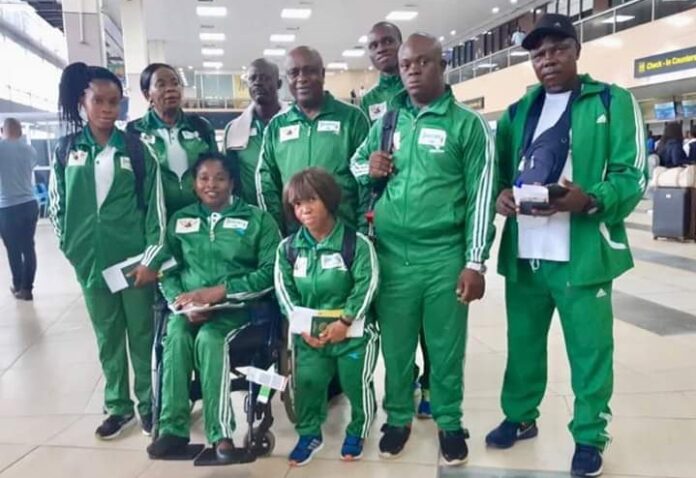
June 23, (THEWILL) – At the Olympic Athletics Stadium in the heart of Tunis, capital of Tunisia, Team Nigeria’s para-athletes delivered a stirring performance at the 2025 World Para Athletics Grand Prix, held from June 12 to 19. The Nigerian contingent, composed of some of the nation’s finest competitors, returned home with 19 medals, 10 gold, six silver and three bronze, finishing in the second position overall among 61 participating countries.
This achievement stands as a testament to the athletes’ dedication, the support from the National Sports Commission and Nigeria’s growing influence in global para-athletics. Marked as a key qualifier for the 2025 World Championships in New Delhi, India, the event saw over 390 athletes from nations such as Tunisia, Algeria, China, and Uzbekistan compete fiercely across track and field events.
The Nigerian team’s medal haul was driven by standout performances from athletes like Flora Ugwunwa, Sefiu Ojeley, Alam Ugochi, Uwak Unyime, and Christopher Michael. Flora Ugwunwa, a seasoned Paralympian, claimed gold in the women’s F54 shot put and discus events, her throws a result of years of disciplined training. Sefiu Ojeley and Alam Ugochi excelled in track events, each finishing with multiple podium appearances in their respective disability classes. Uwak Unyime, an emerging talent, added to the tally with consistent performances, while Christopher Michael’s victory in the men’s 100m T11 event marked a highlight of Nigeria’s campaign. These athletes, competing across various disability classifications such as F54 for seated field events and T11 for visually impaired sprinters, showed versatility and strength. Their achievements were not merely individual triumphs but a collective effort that underpinned Nigeria’s depth in para-athletics.

The Tunis event was a critical outing for para-athletes worldwide. With the 2025 World Championships in New Delhi, scheduled for September 27 to October 5, looming, the event served as a vital qualifier.
According to reports, 390 athletes from 55 to 61 nations, competed at the Olympic Athletics Stadium. The competition was intense, with the host nation, Tunisia, fielding stars like Raoua Tlili, an eight-time Paralympic champion, who won gold in the women’s shot put and discus F40-F41 events. Algeria also made waves, with athletes like Ahmed Mehideb and Mounia Gasmi setting an African record in the women’s shot put F32. Nigeria’s ability to finish second overall, behind only Tunisia, in such a competitive field speaks volumes about the team’s preparation and focus. The event’s global scope, with strong contingents from India, China, and Uzbekistan, further amplifies the significance of Nigeria’s 19-medal haul and overall performance.
Nigeria’s success in Tunis builds on the country’s storied legacy in para-athletics. The nation’s contingent has long been a dominant force in African para-sports, with athletes like Lauritta Onye and Esther Oyema earning medals at previous Paralympic Games. At the Marrakech 2025 World Para Athletics Grand Prix in April, Nigeria claimed four gold medals, including two from Goodness Chiemerie Nwachukwu in the women’s discus and shot put F42 events. This consistent performance across international competitions reflects a robust system for identifying and nurturing talent. Results from Tunis have further solidified Nigeria’s reputation, earned qualification of the country’s athletes not only for the New Delhi World Championships but also for the Commonwealth Games and the Los Angeles 2028 Paralympics. This forward momentum positions Nigeria as a contender for even greater achievements in the coming years.
The athletes’ accomplishments were underpinned by significant institutional support. Sunday Odebode, President of the Paralympic Committee of Nigeria, praised the National Sports Commission for its role in funding and facilitating the team’s participation. In a statement recently, Odebode highlighted the leadership of NSC Chairman Mallam Shehu Dikko and Director General Hon. Bukola Olopade, noting their efforts in providing unprecedented financial support for para-sports. This backing enabled athletes to focus on training and competition without the burden of logistical concerns. Kehinde Ajayi, the NSC’s Director of Information and Public Relations, echoed this sentiment, attributing the team’s success to Dikko’s dynamic leadership. Rafiu Olawale Etti, President of the Para-Athletics Federation, also played a crucial role in coordinating the team’s efforts, ensuring seamless preparation and execution in Tunis.
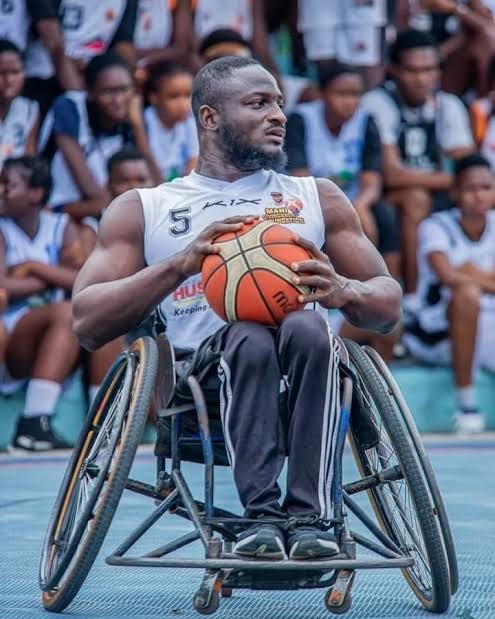
Despite this support, challenges persist in Nigeria’s para-sports ecosystem. Limited access to world-class training facilities and equipment remains a concern, as does the need for sustained funding to maintain momentum. Odebode acknowledged these issues indirectly, emphasising the importance of the NSC’s new funding approach, which has streamlined programmes and supported initiatives like training camps for para-athletes and wheelchair basketball teams. The discovery of 10 new para-lifters for the World Tournament in Santiago, Chile, illustrates the potential for growth when resources are available. Addressing these challenges will be critical as Nigeria prepares for future competitions, including the New Delhi World Championships and the Commonwealth Games, where the team aims to build on its Tunis success.
The performances of individual athletes merit closer attention, as they reflect the diversity and strength of Nigeria’s para-athletics program. Flora Ugwunwa’s dominance in field events, particularly in the F54 category, stems from her experience and technical precision. Her gold medals in Tunis add to a career that includes Paralympic and Commonwealth Games honors. Christopher Michael’s sprint in the 100m T11, a category for athletes with total or near-total visual impairment, required not only speed but also coordination with a guide, highlighting the unique demands of para-athletics. Uwak Unyime, a younger athlete, represents the next generation, with her multiple podium finishes signaling a promising career. These athletes, supported by coaches and the Para-Athletics Federation, trained rigorously to compete against the world’s best, often under conditions less ideal than those of their international counterparts.
The global context of the Tunis Grand Prix adds further weight to Nigeria’s achievement. Tunisia’s Raoua Tlili, a hometown favorite, continued her remarkable career with victories in the shot put and discus F40-F41 events. Algeria’s contingent, including Mounia Gasmi’s African record in the shot put F32, posed a formidable challenge. The presence of athletes from Cuba, India, and China, each with their own Paralympic stars, made the competition a true test of skill and preparation. Nigeria’s second-place finish, with 10 gold medals outpacing many larger delegations, underscores the team’s efficiency and focus.
Looking ahead, Nigeria’s para-athletes are well-positioned for future success. The qualification for the New Delhi World Championships, secured through their Tunis performance, offers a chance to compete at the Jawaharlal Nehru Stadium between September and October. The event will be a landmark for India, hosting its first World Para Athletics Championships. Nigeria’s athletes will also prepare for the Commonwealth Games and the Los Angeles 2028 Paralympics, with training camps already underway for para-athletes, para-swimmers, and wheelchair basketball teams. Odebode’s assurance of “even bigger victories” reflects confidence in the team’s trajectory, supported by the NSC’s commitment to expanding para-sports programmes.
The broader significance of Nigeria’s performance lies in its impact on national consciousness. Para-athletics, often overshadowed by mainstream sports, has gained visibility through the team’s success. Their 19 medals represent more than athletic achievement; they symbolise the potential of athletes with disabilities to inspire and unite a nation. Their success should spur greater inclusivity in Nigerian sports, encouraging more individuals with disabilities to pursue competitive athletics.
Nigeria’s para-athletes have demonstrated that with dedication, support, and opportunity, they can compete with the world’s best. The Tunis event was a moment of triumph, but it also serves as a foundation for future aspirations. The National Sports Commission’s role in funding and logistics, combined with the leadership of the Paralympic Committee and Para-Athletics Federation, has created a framework for sustained success. However, the path forward requires addressing ongoing challenges, such as improving training facilities and ensuring consistent support. The athletes themselves, from veterans like Flora Ugwunwa to rising stars like Uwak Unyime, embody the spirit of determination that defines Nigeria’s para-athletics programme. Their 19 medals in Tunis are a milestone, but the true measure of their legacy will be the inspiration they provide for future generations and the continued growth of para-sports in Nigeria.

Jude Obafemi is a versatile senior Correspondent at THEWILL Newspapers, excelling in sourcing, researching, and delivering sports news stories for both print and digital publications.