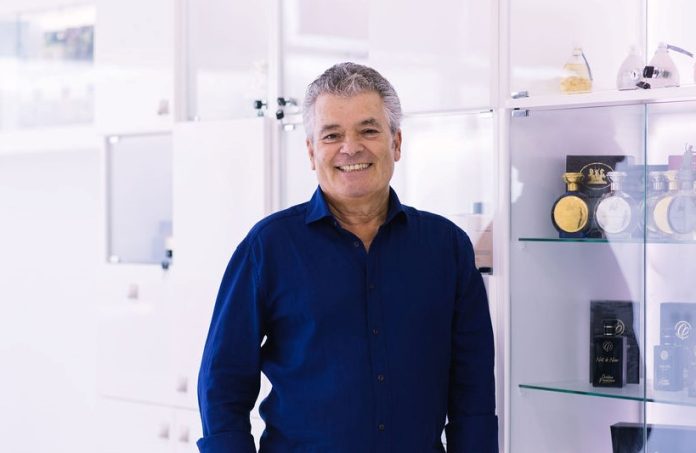
May 5, (THEWILL)- Christian Provenzano is one of the most sought-after niche perfumers in the world. Fondly called the ‘Master Perfumer,’ he is responsible for creating three out of the nine exquisite Clive Christian range of perfumes as well as Agent Provocateur and many others. He speaks with IVORY UKONU about his 53-year journey in the niche perfume business. Excerpts:
What inspired you to start a career in perfumery?
I entered the fragrance industry in 1971 purely by accident. To be honest, I had no idea that this industry even existed. I joined a Dutch company in Amsterdam as a laboratory technician, compounding fragrances. Several months after working in the laboratory, the head of perfumery discovered that I had a good sense of smell and encouraged me to join their perfumery school where I trained for 18 months. After I completed training, I was taken on as a ‘trainee perfumer’and mentored by a highly qualified perfumer who helped me a lot to develop my career.

Four years on, I moved to England to join a British company as a junior perfumer, working on all types of fragrances, such as soap, detergent, shampoo, etc. I was then approached by another UK company who offered me a position as perfumer. This is where my career started to become more interesting, working on all types of projects including fine fragrances. In 1989, I joined CPL Aromas as a senior perfumer, creating fragrances for numerous brands like Penhaligon’s, Boadicea the Victorious, Sospiro, Nishane, Clive Christian, Electimuss, Jo Malone to name a few. Recently, I was given the title of ‘Master Perfumer,’ leading a team of 30 perfumers worldwide.
What is it about fine fragrances specifically that has captured your imagination?
Fragrance is a powerful entity. Certain scents can transport us to another place and bring you back to memories from your childhood, your mother’s cooking and a holiday. It also can change your mood and evoke emotions due to the ability to influence your brain.
Fine fragrances are also the ultimate identity and confidence maker. It is playful. You can pick and choose fragrances according to our events, the season and our style for that day. You can layer, create your own scented identity. For me particularly, fine fragrances are like art, I love combining raw materials in bold ways, to create multifaceted perfumes that are meaningful to people.
Where do you look for inspiration when creating a fragrance?
Inspiration is everywhere. As a perfumer, your nose is always on standby, ready to pick up new ideas that can literally come from everywhere. A night in the desert, experiences from traveling, a wedding in India… every experience is an opportunity to feed your imagination. It comes directly from the perfumer’s personal experience.
The most powerful creations come when the vision is aligned. There is a concept, an idea, it is then imagined through vision boards, imagery and storytelling. The collaboration and dialogue between the perfumer and brand can then begin.
The perfumer might need to do some research to fully understand the client’s vision to make sure he is on the right track. Special ingredients will be curated and combined and then the magic happens. Name, packaging, colors and bottle are also important factors to inspire the perfumer. These need to be consistent.
You are 53 years old in the perfumery business. What challenges did you encounter in all those years and how were you able to surmount them?
I think the market is saturated with too many launches. Consumers are getting confused with too many flankers, multinational brands copying each other. When I was younger, a new launch was always an important milestone. Today it is no longer the case. To truly stand the test of time, a fragrance needs to have something that resonates with the buyers, ultimately.
The younger generation is very savvy. They spend time on social media reading reviews and educating themselves on a scent before they buy. It is our responsibility to give them really unique scents. Another important factor to consider is our relationship with fragrance ingredients, particularly naturals. We use precious resources from nature and with climate change. These resources are more precious than ever. Formulating thoughtfully and with care is key. At the end of the day, being genuine in your perfumery is the only secret. People and brands will appreciate a high work ethic and creations that, done with care and passion, speak for themselves.
After 53 years in the industry, what is that one advice you would like to give someone seeking to enter the industry and make an impact like you have done?
My advice would be to join a perfumery school as I did, although these courses can be a bit expensive. This will help you understand perfumery raw materials. Having a degree in chemistry would also help you to understand the composition of chemicals and natural products. A good sense of smell is also important for someone who wants to become a perfumer. After your training, you should be able to identify hundreds of different raw materials, but that is just the beginning, considering that you will have almost 2,500 materials to memorise. Never stop smelling. Be curious and keep up to speed with new launches, trends, trials and error. That is the only way. There is no shortcut.
You were responsible for creating three out of the nine exquisite Clive Christian range of perfumes as well as Agent Provocateur and many others. How are you able to determine what notes to use for different perfume houses to avoid them all smelling alike and to have distinct smells.
Each project has a different story. Customers’ requirements are always different and with a raw material palette of approximately 2,500 ingredients, you can make millions of different combinations. I like to build accords step by step. For example, I can start with a chypre structure and then, to add freshness, experiment with different approaches on the top notes. We can be fruity, with neo fruits like our own Alphonso mango or William’s Pear Aromaspace, that I like to use a lot in my creation. I work in tandem with the brand creators and we smell together until we get that perfect emotion or DNA they are looking for. We usually know it’s the right one when everyone around the table has that smile,that gut feeling. When you know, you know.
You are currently based out of Dubai where you lead a team of 30 perfumers worldwide from the Dubai creative centre. What is that like?
I have an excellent team of perfumers from different nationalities based in Paris, London, Dubai, Hong Kong, Germany, India, Colombia and Spain. I don’t get involved in their day-to-day work, but I am always available if they need my help. We normally meet once a year in different locations. The last meeting took place in Bulgaria where we all experienced the production of Rose Oil from start to finish.
Why settle for Dubai rather than Grasse, south of France considered to be the perfume capital of the world?
Dubai is the crossroad between east and west. Influences and confluences meet and mingle. From the most traditional Arabian notes to the most prestigious niche, there is a true love affair with perfumery. I resonate with the multitudes of cultures that I find here and I feel at home with all of them. For me Dubai is the best place to live and if you love perfumes, this is the best place to be. You will find all the best brands in the world. Why go to Grasse? I think there are more fragrances and brands coming from the Middle East these days than Grasse.
What inspired your own brand of Christian Provenzano Parfums?
After having created many fragrances for various brands, I thought it was time for me to create my own. I was a bit scared at the beginning, but I learned so much about packaging, bottling, marketing and so on. The truth is, creating for other companies is easier for me, as you have another point of view to work with.
Creating your own brand is more difficult. You never know when to stop. You keep asking yourself, ‘should I do one final trial?’ ‘Is it good enough to launch?’ ‘What if people don’t like it?’ These are the sort of things that go through your head. The pressure is immense. And it is my name! So I am aware of the expectations of the fragrance community which has been loyal to me for a long time, and I want to give them joy and a pleasurable experience.
There is an upsurge in the Middle Eastern perfumery market. What is responsible for this?
Perfume has always been an important art form in Arabic culture. The Arabs love perfumes. It’s common for a woman to do some perfume layering, apply two or three perfumes at the same time and adding a touch of Oud oil as well. It is a part of the culture and identity. There has always been a very high usage of perfumes in the region, it is only that recently, over the past 10 years, that global brands have opened their eyes on the importance of the perfumery landscape in this part of the world. And influences travel, it’s part of the globalization of the world. You can now find Oud on the streets of London, and French Lavender in the Deira souks. Niche perfumery searched for powerful and distinct identities as inspirations and found it in the Middle East.
Having been privileged to work on many areas of perfumery, why did you choose to specialise in French-Oriental and traditional Arabic fragrances?
As I mentioned earlier, I worked in all aspects of perfumery before, but when I was asked to move to Dubai, I immediately fell in love with the Middle Eastern fragrances. I have been very fortunate to work with experts in Arabic fragrances, introducing me to some amazing perfume ingredients that few western perfumers are aware of. I love working on niche fragrances. No price restriction, highly concentrated perfumes and you can use the best quality of raw materials available. I have learned to work with powerful ingredients, in a way that they appeal to western taste and do not overpower the scent. It is a different way of designing scent.
As a veteran in the industry, what are the innovations that we can expect from fragrances in the near future?
Perfume trend is constantly changing. Today, we see a lot of gourmand fragrances, Vanilla, cherry, nuts such as pistachio and the latest I have encountered is Oud combined with tropical fruits. Who knows what tomorrow will bring.
If you weren’t a perfumer, what other career do you think you would have excelled in?
As I enjoy cooking, I would have probably opened a restaurant.
Ivory Ukonu is a versatile journalist with many years of experience, with entertainment and society reporting as her area of core competence.