
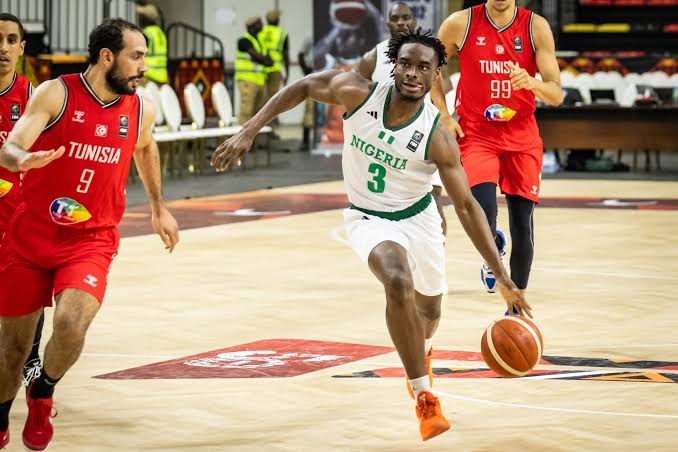
December 07, (THEWILL) — Nigeria’s senior men’s basketball team returned from the first window of the 2027 FIBA World Cup African Qualifiers with results that should alarm anyone who has followed the nation’s sporting fortunes. The D’Tigers lost to Tunisia in overtime by 88 to 78, suffered a crushing 69 to 55 defeat to Guinea in what marked Guinea’s first ever victory over Nigeria at this level and barely scraped past Rwanda 75 to 69, again requiring extra time. This 1-2 record represents far more than a poor showing. It is the visible symptom of a profound systemic decay that has been eroding Nigerian basketball for years.
The Guinea defeat deserves particular scrutiny. Guinea controlled proceedings from the opening whistle, winning all four quarters and producing a scoreline that suggested not merely better tactics but superior preparation and resolve on the day. For a nation that once dominated African basketball, losing to Guinea for the first time in history should prompt serious questions about how far standards have fallen. The team’s slide in the FIBA world rankings from the mid forties to 53rd place underlines the scale of the problem, marking not just a numerical decline but a loss of influence and a widening gap to nations that now prepare with steadier systems.
Yet the raw results tell only part of the story. What unfolded on court offers clearer cause for concern. Nigeria’s usual traits of physicality and quick transition offence were conspicuously absent for long stretches. The team began games sluggishly, committed basic errors with the ball and displayed defensive lapses that allowed opponents to build commanding leads. The statistics paint a damning picture. Across the three games, Nigeria averaged just 67.3 points whilst conceding 70.7, producing a negative point differential of minus 18. Turnovers averaged 20 per match, leading directly to 28 opponent points from those mistakes. Shooting efficiency suffered badly, with an overall field goal percentage of 38 per cent and three-point shooting at a dismal 29 per cent. By comparison, Nigeria’s 2015 AfroBasket-winning team averaged 78 points per game with a 45 per cent field goal rate and just 12 turnovers.

Tactical errors compounded these statistical shortfalls. The pick-and-roll defence faltered repeatedly, allowing Tunisian and Guinean guards to penetrate for 32 combined layups. Nigeria relied on isolation plays for 55 per cent of possessions, leading to contested shots and stalled offence. Against Guinea, the team shot just 27 per cent from the field, exposing breakdowns in both transition and half-court execution. Late-game decisions drew particular criticism, with coach Abdulrahman Mohammed keeping a fatigued Talib Zanna on the floor for 31 minutes without sufficient bench support, resulting in five turnovers in the fourth quarter alone.
The lone victory against Rwanda, whilst providing a measure of relief, only served to expose how reliant the team has become on individual brilliance rather than cohesive system play. Morris Udeze delivered a tremendous performance, scoring 30 points and grabbing 10 rebounds, making the difference between a solitary win and a complete whitewash. Yet this highlighted the team’s dangerous dependence on a single man to overcome opponents that Nigeria should, historically, dispatch comfortably.
The roots of these on-court failures lie not in the playing arena but in what preceded it. Preparation was woefully inadequate. The squad arrived at the Tunis venue very late, with only 48 hours for training before the match. The team held a single week-long camp in Abuja before departure, far below the four-week minimum recommended by FIBA for qualifiers. Several Europe-based players arrived just two days before the Tunisia game, citing club commitments and visa delays. Guard Ike Nwamu acknowledged after the matches that the squad did not have sufficient time together, explaining that rushed three-point attempts stemmed from poor spacing and that frequent turnovers resulted from a clear lack of organisation.
Funding constraints delayed the camp’s start by three days, with players covering initial travel costs themselves. The Nigeria Basketball Federation cited budget shortfalls from unresolved 2021 Olympic bonuses, still unpaid to 12 players. Administrative turmoil within the federation has exacerbated these issues for years. Factional disputes since 2021 have led to two interim boards, delaying strategic planning and creating an environment antithetical to consistent success. FIBA issued a warning in October 2025 over governance lapses, threatening sanctions that could bar Nigeria from future events.
Selection decisions also drew sharp scrutiny. The 12-man roster omitted key diaspora talents like Josh Okogie and Precious Achiuwa, both NBA veterans available according to club schedules. Instead, it included three players inactive for over six months due to injuries or club releases, limiting depth. The roster featured five Rivers Hoopers players despite their modest 2025 season, raising questions about favouritism towards local league affiliates. Rwanda, ranked lower, integrated four Europe-based professionals seamlessly, whilst Guinea’s success without NBA champion Mamadi Diakite stemmed from cohesive unit play, contrasting sharply with Nigeria’s disjointed lineup.
Beyond immediate preparation issues lies a deeper structural problem. Basketball stakeholders point to the failure to operate a viable domestic league as a core weakness. Former D’Tigers captain Olumide Oyedeji stated bluntly that no country can succeed at the top level without sound grassroots development and a strong domestic league. The men’s Premier League operated with only eight teams in 2025, down from 16 in 2019, due to unpaid stipends and venue issues. This pipeline drought means fewer homegrown talents feed the national team, forcing over-reliance on diaspora players assembled days before major tournaments.
The qualification picture remains alive but far less comfortable than it should be. Nigeria must finish among the top three teams in Group C to progress. With one win and two losses, the team must perform with near perfection in the February 2026 window. Missing the 2027 World Cup in Qatar would mark the third straight absence, eroding hard-won African dominance built over previous decades.
There are instructive lessons in the approaches of countries that now challenge Nigeria. Cape Verde, ranked 37th globally despite a population under 600,000, mandates four-week camps and reconciles federation factions annually. South Sudan, now Africa’s top-ranked side, partners with NBA Africa for scouting. Rwanda and Guinea exploited Nigeria’s weaknesses with tactical discipline and superior organisation, demonstrating that preparation and coherent administration can overcome gaps in individual talent.
Reform offers a clear path forward. The immediate priority must be resolving the leadership crisis within the federation through independent elections. Once stable governance is established, the focus must shift to creating clear schedules, full training blocks and transparent selection criteria. Funding must be secured through partnerships like the Basketball Africa League model, ensuring timely release of budgets and payment of long-overdue bonuses. Rebuilding the domestic league with a minimum of 12 teams, incorporating youth academies, would restore the pipeline that has dried up since 2017.
Appointing a foreign technical director, as Senegal did in 2024, could provide the expertise needed to oversee scouting and camps with international best practices. Enforcing mandatory four-week preparations before competitions would give players the time to build chemistry. Since 2021, Nigeria holds a 4-12 record in FIBA competitions. Addressing these systemic gaps could reverse that ledger.
The D’Tigers have history and talent. The team has reached major tournaments in past cycles and won continental titles. Current performance shows that history and talent alone will not save a side that lacks the structure needed for modern international play. The coming weeks and months must be for work rather than headlines. If the game authorities choose to use this window as a wake-up call and follow through with decisive action, Nigeria can still be competitive in the qualifiers. If those steps are not taken, these results will mark the first clear sign of a longer, potentially irreversible decline. Nigeria’s place in African basketball is too important to be left to last-minute plans and rushed travel. Until that structural foundation is repaired, the momentary brilliance of individual players will continue to be overshadowed by the consistent failure of the system surrounding them.

Jude Obafemi is a versatile senior Correspondent at THEWILL Newspapers, excelling in sourcing, researching, and delivering sports news stories for both print and digital publications.