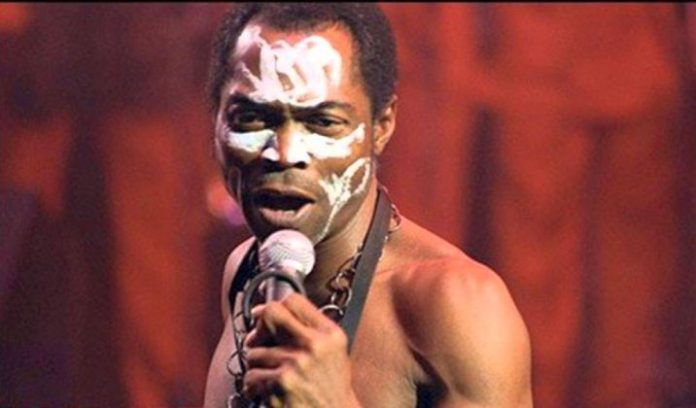
January 30, (THEWILL) — Legendary Nigerian musician, Fela Anikulapo-Kuti, will be posthumously honoured with the Lifetime Achievement Award by the Recording Academy.
The award will be presented at the Special Merit Awards ceremony on January 31, 2026, in Los Angeles, a day before the 68th Annual Grammy Awards.
The Lifetime Achievement Award recognises performers whose work has made a lasting and significant impact in recording history. Fela joins a distinguished group of honourees this year, including Carlos Santana, Chaka Khan, Cher, Paul Simon, and Whitney Houston.

Reacting to the announcement, Fela’s son and fellow Afrobeat musician, Seun Kuti, described the honour as long overdue.
Speaking to the BBC, he said, “Fela has been in the hearts of the people for such a long time. Now the Grammys have acknowledged it, and it’s a double victory. It’s bringing balance to a Fela story.”
Fela, who died in 1997 at age 58, created the Afrobeat genre by blending West African rhythms with jazz, funk, highlife and lyrics rooted in activism and protest. His music boldly addressed corruption, social injustice and political oppression, making him one of Africa’s most influential cultural figures.
Nearly three decades after his death, the honour makes Fela the first African artist to receive the Grammy Lifetime Achievement Award.
The award will be received in Los Angeles by members of his family, including Yeni Kuti, Femi Kuti and Kunle Kuti, on behalf of the Kuti family and the wider Afrobeat community.
Although Fela never received a Grammy nomination during his lifetime, his work has gained global recognition in recent years. In 2025, his 1976 album, Zombie, was inducted into the Grammy Hall of Fame.
Fela’s legacy continues through his family. His sons, Femi and Seun Kuti, remain active performers, while his daughter, Yeni Kuti, co-founded the annual Felabration festival. The New Afrika Shrine and the Kalakuta Museum also help preserve his musical and cultural legacy.
Fela’s work laid the foundation for today’s Afrobeats movement and influenced artists across genres. His music remains a symbol of resistance, freedom and creative power.

Evi Ben Ezaga writes on entertainment, culture, and trending stories.