
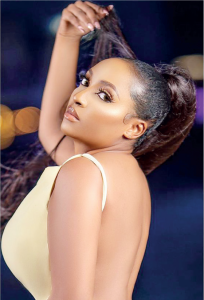
October 03, (THEWILL) – She has been fondly referred to as the face of television in northern Nigeria, but Salma Nabila Philips is much more than that. She is a fierce and bold activist who has taken it upon herself to champion the plight of northern Nigerian women, among other things. She is unraveled like never before in this interview with IVORY UKONU
You once ran a talk show, The Salma Philips Show. Why did you stop it?
Although I am a lawyer and I ran a management company, my passion for journalism and the media kept burning, prompting me to start my own talk show. I didn’t think it was achievable but my husband encouraged me to go for it. I did a pilot episode, took it to DSTV for assessment. Unfortunately, it didn’t make the cut. I was asked to try again.

What did you talk about in the pilot episode?
Basically, about the downtrodden. I went to Dustbin Estate in Ajegunle where people live in shacks on dirt. I interviewed a few talented people, including a fashion designer and a dancer. I wanted to do something different from interviewing famous people, but it was rejected. They said it was better suited for Channels TV. They wanted me to do something bordering on lifestyle, an entertaining stuff. So I went back to the drawing board, did a second pilot by interviewing a few famous people and it was rejected. At this point, I became frustrated. This was in 2014. But my husband kept encouraging me to try one more time. So I called a friend who is a spoken word poet and a writer. She is more American and combined with me, a typical Nigerian. I felt we could create magic particularly because we had a good chemistry. We interviewed regular people and we did five episodes. I was so sure that it wouldn’t be rejected. But to my shock, they rejected all five episodes.
What was the problem this time?
They wanted me to just be myself without coming off as anyone’s replica. Also, they felt my friend sounded too American for Nigerians to relate with. For a whole year I did nothing. I felt I needed to move on to something else as the talk show thing wasn’t working out.
Did you shut your management company while you were trying to create magic for DSTV?
Yes, for a while. My husband then suggested that I take time off to do a short course at the BBC Academy in London on television presenting, writing, broadcasting, directing and producing, since I didn’t have the basic skills on presenting. I eventually got a six months certificate in all of these, came back to Lagos with renewed vigour and confidence. I shot 13 pilot episodes because I was so sure it wasn’t going to be rejected, because of the knowledge I had acquired. This was in November 2015. They played just one episode, watched 18 minutes of it and offered me a deal instantly. Within two to three months, I was on the Africa Magic Showcase.
How long did the talk show run?
Three years.
Why were you bent on having a talk show?
I grew up watching Femi Oke on CNN and loved what she did. She was first and foremost, a Nigerian and that meant what she was doing was attainable and it made me fall in love with television and aspire to do something along that line. But, coming from an Islamic home, my dad, being a northerner from Kano, had already told me it was not going to be possible. My mum studied and practiced law and for whatever reason, she imposed it on me to study law as well. And so my dream to study Mass Communication or Journalism the way I would have loved to, didn’t happen. But I always had it at the back of my mind that one day, I would have my own talk show and I made sure it happened.
Why did you rest the talk show?
I don’t want to ruffle feathers and step on toes, but I went into the media without any prior knowledge about the way things worked. I had a lot of expectations but once I was in the industry, I realised that people aren’t what they claim to be and the industry is not what I thought it was. I assumed that your talents will take you places and speak for you. One day I will tell my story, not now. When I realised this, I didn’t think I could continue. There was a lot going on at DSTV and I just pulled out because my name and reputation was more important to me than fame or a show.
Were they placing a demand on you?
Absolutely and there is a lot of tribalism in the industry that I didn’t know about. And me, just thinking I was coming into the industry to do my show and everyone was going to love me, I was going to make friends, network, get sponsorship and endorsement, etc. It was the direct opposite and I was shocked the more by certain people I looked up to. I was burned and I pulled out. The women in the industry are horrible and fake. They talk about women empowerment, girl power, women supporting women, it’s all bullshit. No one is supporting nobody without an agenda. If they can’t get something from you, you mean nothing to them. They hate you for absolutely no reason. Just from the way you look, they just don’t like you. Some of them see your potential, become terrified and get bitchy with you.
When you say tribalism, was it against you in particular as a northerner?
Yes. So many times, I tried to network with certain people and on one occasion, I was somewhere trying to get introduced to a particular lady. She didn’t know I could hear her and she was telling my then publicist to tell me to go to Kannywood. “What does she want from me?” she asked. “We are going to pick 10 Yoruba people and 10 Igbo people before we even pick her,” she added. She was being very bitchy and that really shocked me. Another one said it wasn’t about my beauty or because I am yellow or a northerner or Fulani woman, then think I can just come in and everyone will drop what they are doing for me. I was only trying to network, work with other women. That rubbed me off the wrong way. It pulled me into a shell and I completely stayed away from everyone in that industry. I felt the industry wasn’t for me because I am a straightforward person and too blunt. I won’t take any disrespect and won’t kiss ass. And that is why I had to take a very long break because if I don’t kiss ass, I will keep having problems and I can’t be having misunderstandings with everyone because it would look like I am the one who has a problem.
Did you try other platforms beside DSTV?
Yes, I did actually, but I realised that if you are not from money, then you have to get yourself out in front of people by causing a controversy. Also, as a northerner, I didn’t have friends in the industry and that affected me. I tried African Independent Television, Television Continental, Nigerian Television Authority, etc. NTA had a problem with my show because I opened the show in Hausa and closed in Hausa. It irritated the lady in charge, but all I was trying to do was showcase a part of my culture and get people to understand that I am a northerner hosting an English talk show. I tried, but it didn’t work out. I had the opportunity to put my show back on DSTV, but I wasn’t willing to do certain things. So I let it slide. I wasn’t going to compromise on who I am, my morals, values, etc.
You are also a filmmaker. How did that aspect of you evolve and why haven’t you explored it more?
It was a passion I developed when I was doing the talk show. I decided to hone it by getting certification from the New York Film Academy. I noticed that things started coming to me and I started being creative with ideas for movies, television series or even a book. I had tons of synopses for different projects. I decided to start off with something about girls in northern Nigeria. I am passionate about young girls because I have two teenage daughters. Two years ago when I turned 35, I felt something was missing. I felt that I wasn’t making proper use of the platform I have for a good cause. I felt that I could do more. While thinking of what I could do to give back to humanity, I thought about girls. Immediately I floated a foundation and named it Mina Shehu (My mum and dad’s first names) for women and girls in the north which is where we have the issues. I took a trip thereafter to Kano and Katsina and in the process of going from house to house, I realised that there was a high case of minors being raped. I am talking about two, three, four year-olds. It was shocking and unbelievable, coupled with the high rate of illiteracy among women, lack of formal education for girls, early marriage for minors and vesico-vaginal fistula. I wanted to document these for the foundation’s website, but there were so many cases that I decided to make a documentary. We read about these things, we hear about them, but no one has really gotten the stories from the victims via a northerner who is a Hausa/Fulani woman. I was a bit worried because northerners don’t like publicity and would rather shield the atrocities. I began to document them from November 2019 and completed the documentary in March 2021. My crew were traumatised by the time we were doing. And don’t forget we went deep into the northern region where terrorists are on rampage. We put our lives at risk, but it was worth it. The stories were unbelievable and horrible. Girls in the north are going through a lot and people are behaving as if it is normal. It is like a new normal in the North. No one takes it that serious anymore. We submitted the documentary to some film festivals and three of them picked it for consideration. We are shopping it to three of the biggest streaming companies worldwide and the feedback from it has been good.
You are also a UNESCO ambassador. How did that happen?
My manager organised a private screening of the documentary for some officials at UNESCO. They were so impressed with it and wondered which organisation funded the documentary. They were surprised to learn that I did it all by myself. So they offered to make me an ambassador for education, to enable me to use my voice and my platform to raise awareness for girls, not only in northern Nigeria, but also in West Africa. I was beyond happy, especially because I have tried so hard to penetrate certain brands, organisations, people in Lagos and I wasn’t given a chance to work with them. So for an organisation like UNESCO to say, come on board. It made me realise I was doing something right.
Why do you think a lot of prominent northerners are hesitant about using their influence, platforms to raise awareness about the plight of women, young girls, even young men in the North?
To be honest, I do not know. I have spoken to one or two Kannywood celebrities to use their platforms with huge following to raise awareness about what is going on in the North. I think most of them are scared of a backlash. Their market is northern Nigeria. Their affiliation is with politicians and wealthy northerners. If they start to speak against these things, it is like they are speaking against the same people they are affiliated to. One thing most people do not understand is that northerners have a big problem, one of which is hypocrisy and blind loyalty. Even within my own family, when I speak out against certain things, they shut me up because they think I talk too much. Some members of my extended family don’t like me because they think I am too vocal. I don’t understand how they can see all of these things going on and remain quiet. The people who get killed on a daily basis are the same ones who support their craft. The least they can do is to use their platform to spread awareness once in a while. But people who should use their platform, wealthy northerners carry on as if all is well.
Why are you different from the average northerner?
My mum was partly Igbo, partly Kalabari. I was raised by a South-South woman. My mum didn’t raise me like a typical Hausa/Fulani lady. I was raised in such a way that my mindset, my values are totally different from the average northern woman. It doesn’t make me special or better than a Fulani, a Kanuri or Shuwa Arab woman. I have always been a rebel in the family, the black sheep, because when you tell me to dress a certain way, to live my life a certain way, to navigate my way through life in a certain way, just the way the average northern woman would, I am sorry I won’t. I would do the exact opposite of what you are asking me to do. I think they have accepted me now for who I am. Growing up, they will say, tie your hair because as a Muslim, you are supposed to wear the hijab and I would counter them because the Holy Quran didn’t say I should have the hijab or niqab on.
Are you a practising Muslim?
Yes. There is nothing I do not know about my religion. I was tutored on the holy Quran, I am versed in Islamic religion. It is the culture of the Arabs to cover their hair always, but not as an African, a Nigerian for that matter. Before Islam came to Arabia, Arab women were covering their hair, but it isn’t written in the Quran for a Muslim woman to cover her hair. Islam talks about modesty in dressing; don’t show your leg, your arm, nothing about covering your hair like a ninja. And so I would argue back and forth with my Islamic teachers then who wanted me to do the exact opposite of what the Quran says and my dad would just be wondering what was wrong with me. And let me shock you. I am a proud feminist, not the typical Nigerian feminist. I think a lot of Nigerian feminists mistake feminism to mean men haters. Feminism is about our rights as women, equality for both sexes in all aspects of life including the home.
Does Islam teach that men and women are equal at the home front?
There is no where it says in the Quran that men and women are equal in the sight of Allah, but it also doesn’t say that men are superior to women. But it does acknowledge the importance of women and give them a lot of leverage. The Quran says one can only get into paradise through their mother then their wife. But people use religion and twist it to suit what they want to put out there. They make it look like women are supposed to be suppressed. I have been married for over 10 years and I tell women, even as a feminist, when you are respected in your home, loved properly and there is understanding and friendship, you start to do things for your husband out of love. You find yourself wanting to do more, it comes naturally. My husband married me as a feminist and he is also a feminist. There are many things my husband does that most men will never be caught dead doing but he does them because he enjoys doing them. He doesn’t impose things on me. It is a give and take relationship and it has been amazing. We have our differences like any normal couple, but he allows me to be myself as long as I don’t disrespect him. And I tell feminists that if someone doesn’t agree with your feminist belief, respect her decision, don’t bash her and call her weak. If she wants to bow to her husband as the head of the home, respect her decision and her belief because it is her choice.
Your mum married a northern Muslim, but you chose to marry a Yoruba Christian. Was this deliberate?
I think that because of the experience my mum had with my dad and his family she put it in my head not to settle down with a northern man. She was not tribalistic, but her experience with them left a bad taste in her mouth. Seeing how I related with others, which wasn’t how a typical northern woman would, coupled with my strong views as a feminist, she kept telling me that I wouldn’t survive with a northern man. The culture alone is suppressive. So when something has been put in your head for so long, you begin to gravitate towards men who aren’t northerners. I never dated a northern man but once I started dating a Yoruba man who shared the same values with me, it became easy. I don’t see any of my daughters getting married to a northerner. I won’t impose it on them the way my mum did, I would do it subtly. There is nothing wrong with them, I just don’t agree with their culture and tradition. It is very chauvinistic.
Besides you, are your siblings married to non-northerners as well?
I am the only one married to a non-northerner and I do not have a lot of northern friends. I am not trying to bash any woman but I have never looked up to any northern woman.
Where did you grow up?
I was born in Lagos then we moved to Jos. My younger brother and I moved to Port Harcourt after our parents got separated. My older brother stayed back because he was already in the university.
How do you unwind when you are not busy shooting documentaries or writing?
I like to spend time with my daughters, dine out and travel to exotic destinations with my husband. I am currently writing a book about women and girls in northern Nigeria and I will be exposing a lot of people.
Are you nursing a political ambition?
Absolutely not. My mum died from politics. Her car tyres were shot at and her car somersaulted seven times. Of the five people in the car, my mum was the only one who died. The other four barely had scratches on their bodies but my mum looked like she had been in a gun and knife fight. She was at that time, the South-South women leader during the administration of ex-governor Peter Odili of Rivers State. She was also a member of the Obasanjo Solidarity Forum and they did absolutely nothing for me and my brothers, after promising us heaven and earth. So no, I won’t go into politics, it is a dirty game.
Will you turn down a political appointment, if offered one?
I am indifferent. Maybe, if the appointment has to do with women and girls, empowering them and changing their lives. As long as I am approached, based on merit and my past work, I may accept. But, to contest for elective position, never. God is my witness.
Ivory Ukonu is a versatile journalist with many years of experience, with entertainment and society reporting as her area of core competence.